Serving Costa Mesa, CA and surrounding areas.(949) 541-4812
Harbor Costa Mesa Concrete

Concrete Cutting in Costa Mesa, CA, Sawn Wet and Nothing Sent Down the Gutter

Harbor Costa Mesa Concrete saws trenches, openings and single panels out of 1950s slabs and stem walls with a wet blade, and the slurry leaves in a drum. Every estimate is measured and written on site.

Google reviewsFacebook reviewsBetter Business Bureau reviews5.0 Stars Rated by our customers · Google, Facebook and the BBB
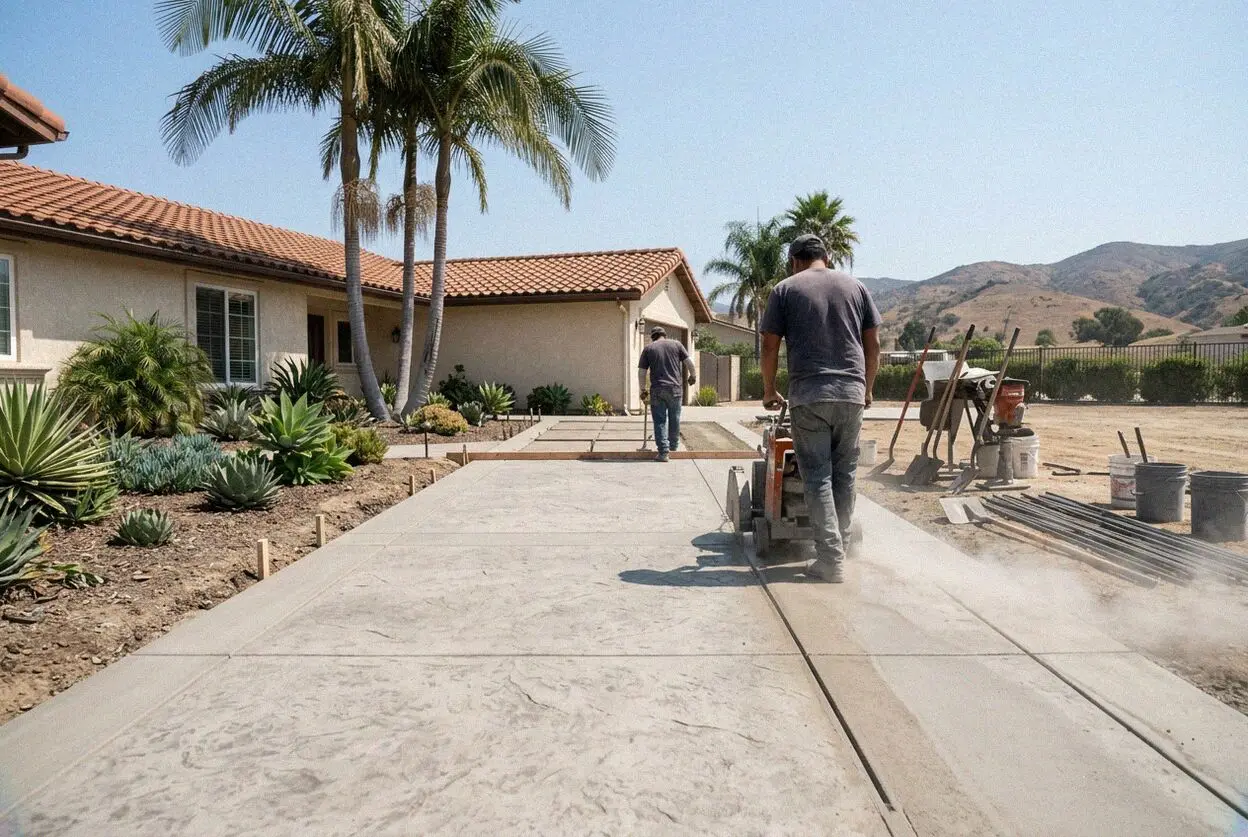
Walk-behind saw cutting a trench in a Costa Mesa garage slab
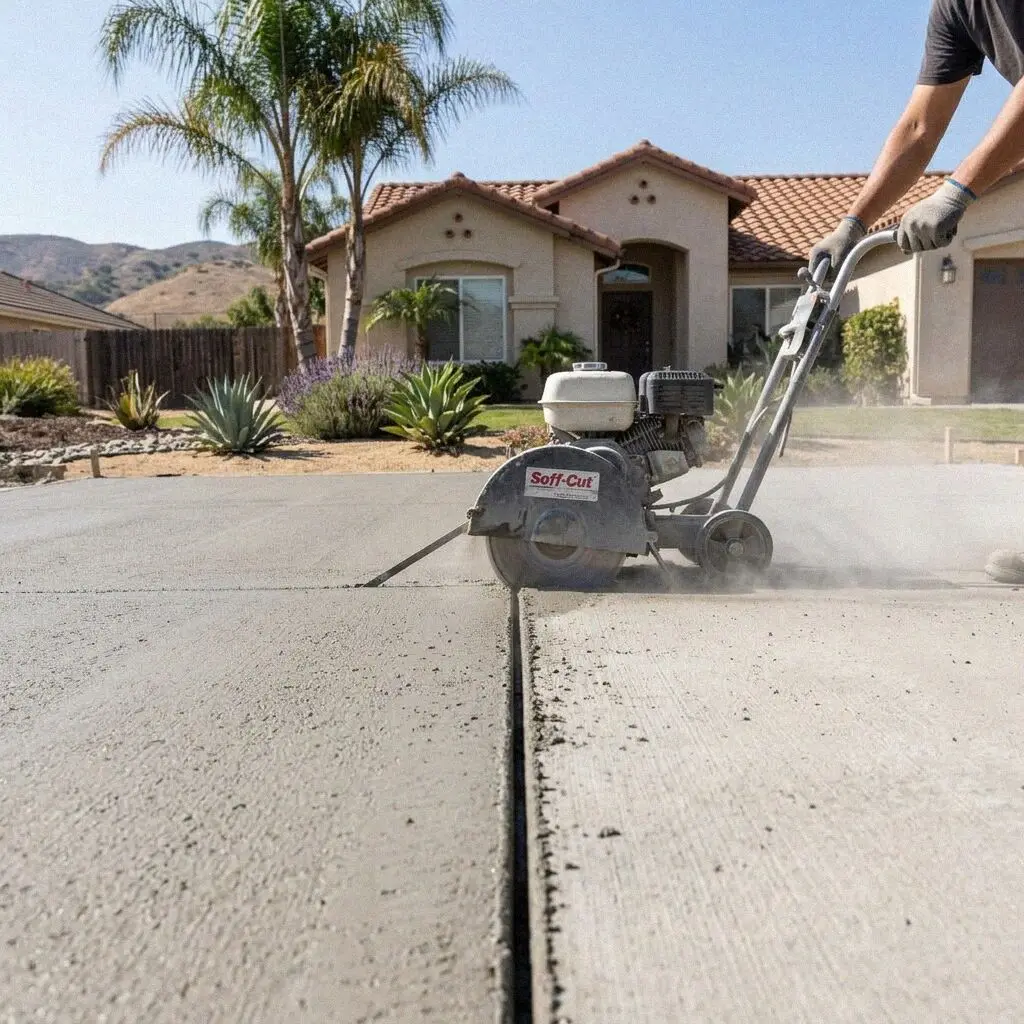
Hands guiding a wet saw along a chalked line on a Costa Mesa slab

How a cut is made here

Sawing Through a Slab in a Costa Mesa Home

Every cut in this city is a water job first and a saw job second. A diamond blade run wet along a chalked line takes a trench, a doorway or one sunk panel out of a slab and leaves a square edge the patch can be doweled to, and the water that cools the blade comes off as a gray slurry with the cement in it still live. Where that slurry goes decides whether the job was done properly, because the gutters here drain to the Santa Ana River and the Back Bay, and slurry sets in a drain.

Harbor Costa Mesa Concrete was founded in 2019 by Julian Mercado, after 15 years on crews across coastal Orange County, and he sets out every line himself before the saw starts. Most of the floors he opens are the 1950s and 1960s slabs of the Eastside, Mesa Verde and the Westside courts, poured thin with little or no steel, so a breaker cracks them a yard past where it lands and a saw does not. The cut is drawn on the joint grid, and the slurry is vacuumed off as it forms.

Cutting is done under a CSLB C-8 license with liability insurance on every job, and the trench it opens is closed by the same crew, doweled to the old slab and finished flush. A cut inside the lot line needs no permit; one through a stem wall carries a building permit from the City of Costa Mesa, a curb cut an encroachment permit, and we pull both. The cut and the closing carry a written workmanship guarantee against defects in how it was built.


Saw or breaker

When does a slab in Costa Mesa need to be cut open?

A warm patch on the floor

A spot of kitchen or hall floor that is warm underfoot, with a water bill that has climbed, is a hot supply line leaking under the slab. The pipe is reached through a trench sawn along its run, and on a thin 1950s floor the saw is what keeps a leak from turning into a rebuilt room.

A panel that rocks or sits low

One square of a garage floor or a walk that clicks underfoot, or sits a half inch below its neighbors, has lost the sand beneath it. It comes out on its joints, cut square, and is repoured on compacted sand, and the panels around it never know it was gone.

A garage that needs a drain

A garage being turned into a unit needs a drain line through a floor that was never plumbed, and the trench for it runs the length of the bay. It is sawn, not broken, because the rest of that floor is about to be somebody's bedroom and it has to stay in one piece.

A doorway through a stem wall

An opening for a door, a new crawl space hatch or a vent through a stem wall is sawn on a track, since a breaker takes the wall down in lumps and leaves nothing square for the frame. Where the wall is carrying the house, the City permits it and an engineer sizes it first.

In every cut

What Goes Into a Concrete Cut in Costa Mesa

Eight things are in every cut at no separate line, and each answers something a slab here does: it is thin and unreinforced, the pipes in it were laid before the floor was drawn, and the gutter outside runs to the Bay.

Slab scanned for pipe

The floor is scanned for copper, cast iron and conduit before a line is chalked, because a 1950s tract slab has no drawing of what is in it.

Line set out on the joints

The cut is drawn on the joint grid where one exists, so a panel comes out whole and the two edges that stay keep their support.

Blade run wet throughout

Water on the blade keeps it cool and keeps silica dust out of the house, and the depth is set to the slab, not through the sand under it.

Slurry drummed, not tipped

The slurry is drawn off the slab as it forms, drummed and hauled, and none of it reaches a gutter that ends in the river or the Back Bay.

Sand held under the edges

The sand under the two edges that stay is left confined, and any that slumps into the trench goes back compacted, so the edges do not drop.

Room sealed and vented

Plastic on the doorways and a fan to the outside, so a cut in an occupied house does not leave a film of gray on every surface in it.

Trench closed and doweled

The opening is closed by us, pinned to the old slab with dowels and finished flush, rather than left for whoever comes after the plumber.

Walk-through and guarantee

We walk the cut and the patch with you against the estimate, the slurry is off the property, and the written guarantee is handed over.

How it can be cut

Costa Mesa Concrete Cutting Methods, Compared

Four ways to open concrete on a lot here, set against what is being cut and what it is inside. The scan, the wet blade and the drummed slurry are the same in all four, so the table is about the tool and the edge it leaves behind.

OptionSuitsCuts toEdge leftWater and mess
Walk-behind flat sawTrenches and panels in slabs and drivesThrough 6 inches in one passSquare, ready to dowelWet, slurry vacuumed as it forms
Hand-held cut-off sawCorners, curbs and short cuts indoorsAbout 4 inches, a 1950s slab exactlySquare, finished by hand at the endsWet, room sealed and vented
Wet core drillRound holes for a drain or a ventThrough any slab or stem wallA clean bore, nothing cracked round itWet, the water caught in a ring
Track-mounted wall sawDoorways and hatches in stem wallsThrough 12 inches of wallPlumb and square for a frameWet, track bolted, slurry drummed

The walk-behind saw does most of the work here and is the cheapest hour on the list; the wall saw on its track is the dearest and the one nothing else can do square.

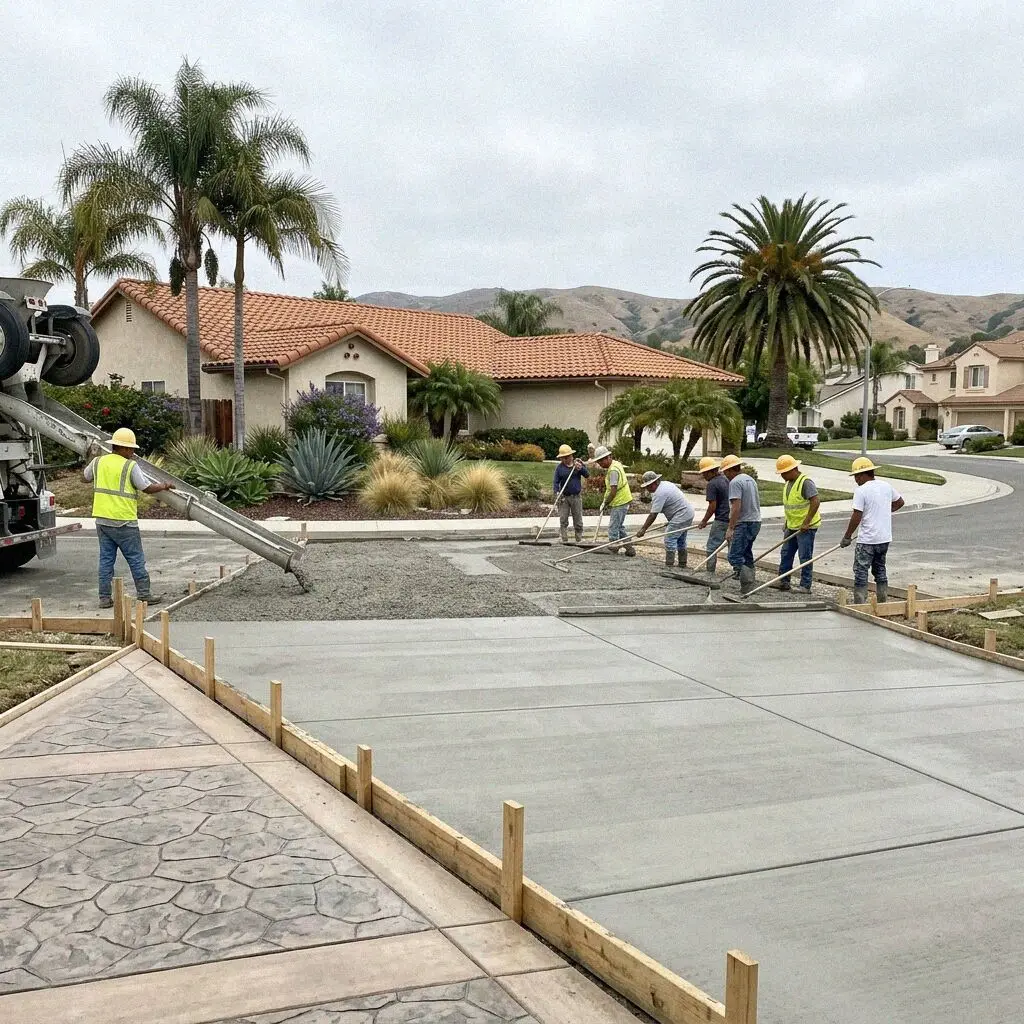
Concrete crew at work on a cut slab at a Costa Mesa home

Water and thin slabs

Why Every Cut Runs Wet in Costa Mesa

The gutter outside the house is what shapes a cut here. It drains to the Santa Ana River on one side of the city and to the Back Bay on the other, and slurry poured into it sets there.

Costa Mesa sits on a mesa between the Santa Ana River and Upper Newport Bay, and the storm drains under its streets carry rain straight to one or the other with nothing between to catch what goes in with it. Saw slurry is cement, sand and water, and it hardens wherever it stops moving, in a gutter, a catch basin or the mudflat at the end of the pipe. So the water on the blade is caught before it leaves the slab, vacuumed off as the cut is made and taken away in drums.

The slab itself is the second thing. The city's floors went down in the twenty years after 1953, poured to whatever thickness the builder chose and with little steel in them, so a breaker sends a crack a yard beyond where it lands. A wet blade set to the depth of the slab takes out exactly the piece drawn and leaves the sand under the staying edges alone, so the patch does not settle a winter later. And since most houses here are rented, cut and patch are done in one visit.

From scan to patch

How We Cut Concrete in Costa Mesa

Five stages, the same crew at each, and the person who scanned the floor is the person on the saw. Anything through a stem wall or at the curb is permitted before the blade starts, and the slurry is off the property before we are.

1

Scan the slab, chalk the line

Julian Mercado scans for pipe and conduit, finds the joint grid, measures the run and writes the figure at the property before he goes.

2

Choose the cut and the day

You set the width, the depth and the day, and a wall opening or a curb cut is filed with the City before anything else is booked.

3

Seal the room, set the water

Doorways are sheeted and a fan set to the outside, the water feed and the vacuum are rigged, and drums are stood ready for the slurry.

4

Saw wet, lift the piece out

The blade runs wet to the slab's depth along the line, the piece is broken free on the cut and lifted, and the sand beneath is kept where it lies.

5

Close, dowel and hand over

After the plumber or the framer, the opening is doweled, poured and finished flush, the drums leave, and the patch is walked with you.

Behind the number

What Sets the Estimate on a Costa Mesa Concrete Cut

The length of the line starts the figure, and what the scan finds finishes it. Two trenches drawn the same can be an hour apart once a pipe turns up under the chalk, so nothing is quoted from a photo. Every estimate is measured and written on site.

The single-family ranch house

A trench for a repipe or a drain across one floor, sawn and closed in a day, and the length of the run is most of the figure.

The fourplex or apartment court

Four bays or four kitchens on one line, cut unit by unit so each tenant keeps a floor, and estimated as one job with a line per unit.

A stem wall or a driveway

A wall opening carries an engineer's sizing, the track saw and a City permit, and a curb cut at the drive carries an encroachment permit.

A thick or reinforced slab

A 6-inch commercial floor or a slab with rebar in it is a slower cut on a bigger blade and more slurry to drum, so it is priced by its depth.

The visit and the written figure cost nothing, and the call that books it comes within 1 business day. The closing pour is its own line. (949) 541-4812 or send us a message.

Ready to have your Costa Mesa slab scanned?

Send the form or call, and someone rings back within 1 business day to fix a time. Julian Mercado scans the floor, chalks the line and writes the figure at your property, with the closing pour on the same page so nothing is left over.

Request a Free Estimate

Written on site · No obligation

By submitting, you agree to our disclosure and consent terms, including being contacted by Harbor Costa Mesa Concrete.

Slabs we opened

Three Costa Mesa Cuts, in Their Owners' Words

Three reviews left on Google, Facebook and the BBB, each about a cut rather than a new pour, and each naming what the saw went through and how the house was left when the drums went out.

Google review

“A slab leak under the kitchen of our Mesa Verde house. They scanned it, found the line, and sawed a trench 14 feet long with no dust in the house because the whole thing ran wet with a vacuum on it. The plumber came the next morning and they closed the floor that afternoon, flush.”

Renata F. of Mesa VerdeTrench for a slab leak repipe · Google · 2024
BBB review

“I own a fourplex on the Westside and wanted a drain through one garage floor for a unit. Julian Mercado cut the trench on the old joint lines, kept the slurry in drums and not in my gutter, and the tenant next door never knew. The patch is the same height as the floor and has stayed so.”

Steve B. of the WestsideGarage drain trench for a unit · BBB · 2025
Facebook review

“We needed a doorway through the stem wall of our Eastside house for a crawl space hatch and vent. They had the City permit and the engineer's letter before they came, cut it with a saw on a track, plumb both sides, and the frame went in with no shimming. It took one morning.”

Louise T. of the EastsideStem wall opening for a hatch · Facebook · 2022

Before you book

Concrete Cutting Questions Asked in Costa Mesa

What sets the figure, how long a cut takes, what is in it, which cuts the City permits, whether the room is livable that evening and what is guaranteed, answered for a slab in a house here.

(949) 541-4812
  • What makes one cutting estimate larger than another?

    The length of the line and what the scan finds under it, and only a little else. A trench across a slab is priced by the foot, deeper for a thicker floor, and a pipe or a conduit under the chalk line moves the line and adds the hand cutting around it. The closing pour is its own line, and a stem wall opening carries the engineer's sizing and the City's permit. Every part is scanned and measured at your house.

  • How long does it take to cut a trench in a slab?

    A morning for most trenches, and the floor is closed the day after the plumber is done. A walk-behind saw runs through 4 inches of 1950s concrete at a few feet a minute, and setting up the water, the vacuum and the sealed room takes longer than the cut. A stem wall opening is a morning on the track. The patch is walkable the next day and takes a car after 7 days, which is the one wait in the job.

  • Does the estimate include closing the trench afterward?

    Yes, on its own line, so you can see it and so it is done by the people who cut it. The opening is doweled into the old slab, poured on compacted sand with a vapor barrier where the room has a roof over it, and finished flush. What sits outside the figure is named at the visit: the plumber's or the framer's work in the open trench, and a permit fee where the City charges one. The number you sign is the one billed.

  • Which concrete cuts need a permit in Costa Mesa?

    A trench or a panel inside your lot line needs none under the California Residential Code, and that covers a repipe, a drain line and a sunk square of garage floor. A doorway or a hatch through a stem wall that carries the house is a building permit from the City of Costa Mesa with an engineer's sizing, and a curb cut or a parkway panel is an encroachment permit from the same counter. We file both.

  • Will homeowners insurance pay to cut the slab for a leak?

    Often for the cut, rarely for the pipe. A slab leak that appears suddenly is usually a covered event, and the policies written here commonly pay to reach the pipe and close the floor afterward while treating the failed pipe itself as wear. Wording differs by carrier, so photograph the warm patch and the meter reading before anything is opened and ask your carrier first. Our estimate keeps cut and closing apart.

  • What is guaranteed once the floor is closed?

    How it was cut and closed: the line set out from the scan, the edges left square, the sand under them kept in place, the patch doweled and poured on compacted sand, and the slurry drummed and off the property. It is a written workmanship guarantee against defects in how it was built. The pipe under the floor, the framer's work in a wall opening and staining on the old slab sit outside it. A fault of ours we fix.

  • What saws and blades actually go into a cut here?

    A walk-behind flat saw with a diamond blade run wet for slabs and driveways, a hand-held cut-off saw for corners and short runs indoors, a wet core drill for round holes, and a track-mounted wall saw for stem walls, all on a water feed with a slurry vacuum behind them. The patch is 3,500 psi ready-mix on dowels drilled and set in the old slab. The tool and the closing mix are named on the estimate.

  • Do I have to be home while the slab is cut?

    Only for the scan at the start and the walk-through at the end. In between the crew needs water, power, a way in and the room emptied of what can be moved, and the doorway to it is sheeted for the day. The saw is loud for the hour it runs and quiet after. A tenant can be in the rest of the house throughout, and where the cut is in a garage the house is not entered. Say if the cut crosses the only way to a bedroom.

Towns we cut in

Concrete Cutting Around Costa Mesa

The eight nearest towns on the list, with the straight-line distance from the office on Newport Boulevard beside each. Every slab is scanned and measured at the property before a figure is written.

Show All Areas We Serve

Book a free scan of your Costa Mesa slab

Call or send the form and you hear back within 1 business day. Say what has to go through the floor or the wall, roughly how long the line runs and whether anyone lives in the rooms it crosses, and the visit is booked inside the week.