Serving Costa Mesa, CA and surrounding areas.(949) 541-4812
Harbor Costa Mesa Concrete

Stamped Concrete in Costa Mesa, CA, Poured Once on Sand That Keeps the Pattern Whole

Harbor Costa Mesa Concrete pours stamped patios and pool decks that cannot be patched so the base is packed sand and the joints hide in the pattern. Every estimate is measured and written on site.

Google reviewsFacebook reviewsBetter Business Bureau reviews5.0 Stars Rated by our customers · Google, Facebook and the BBB
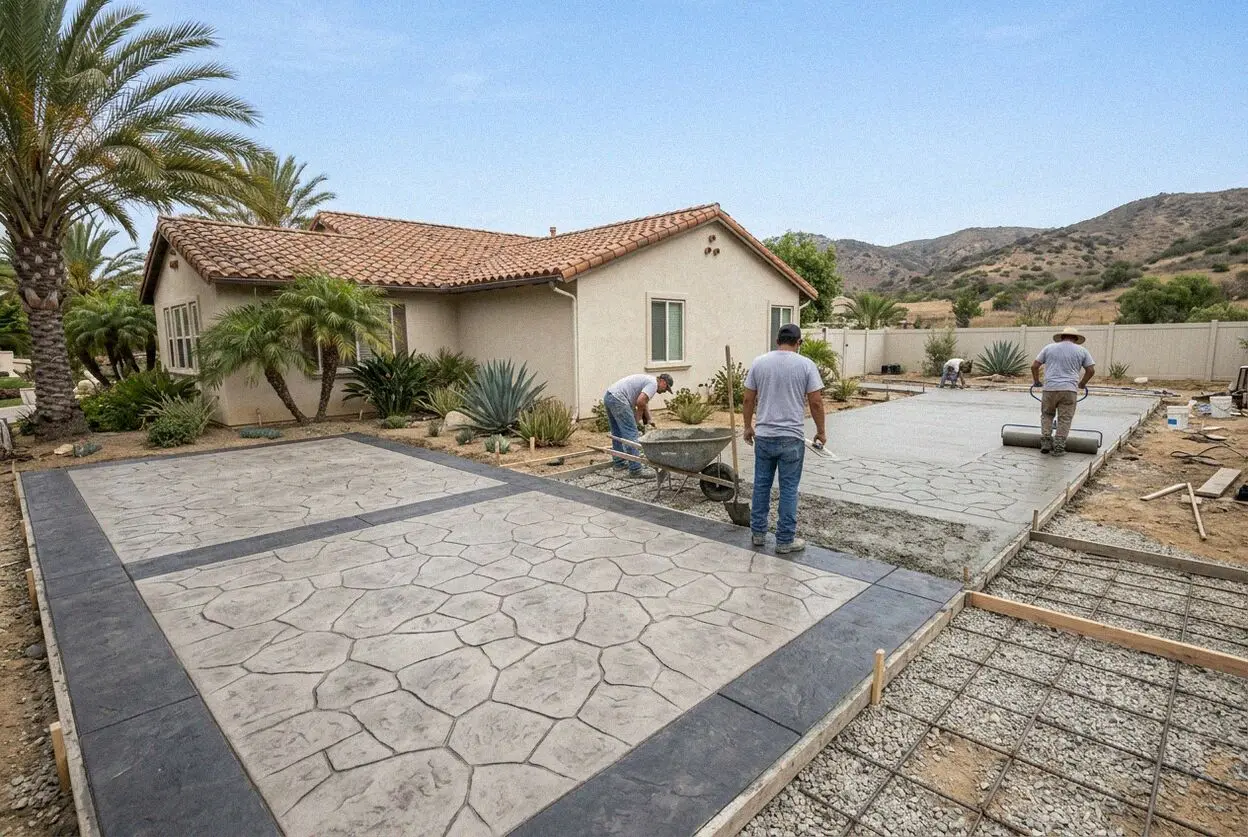
Crew pressing a flagstone pattern into a fresh patio slab in Costa Mesa
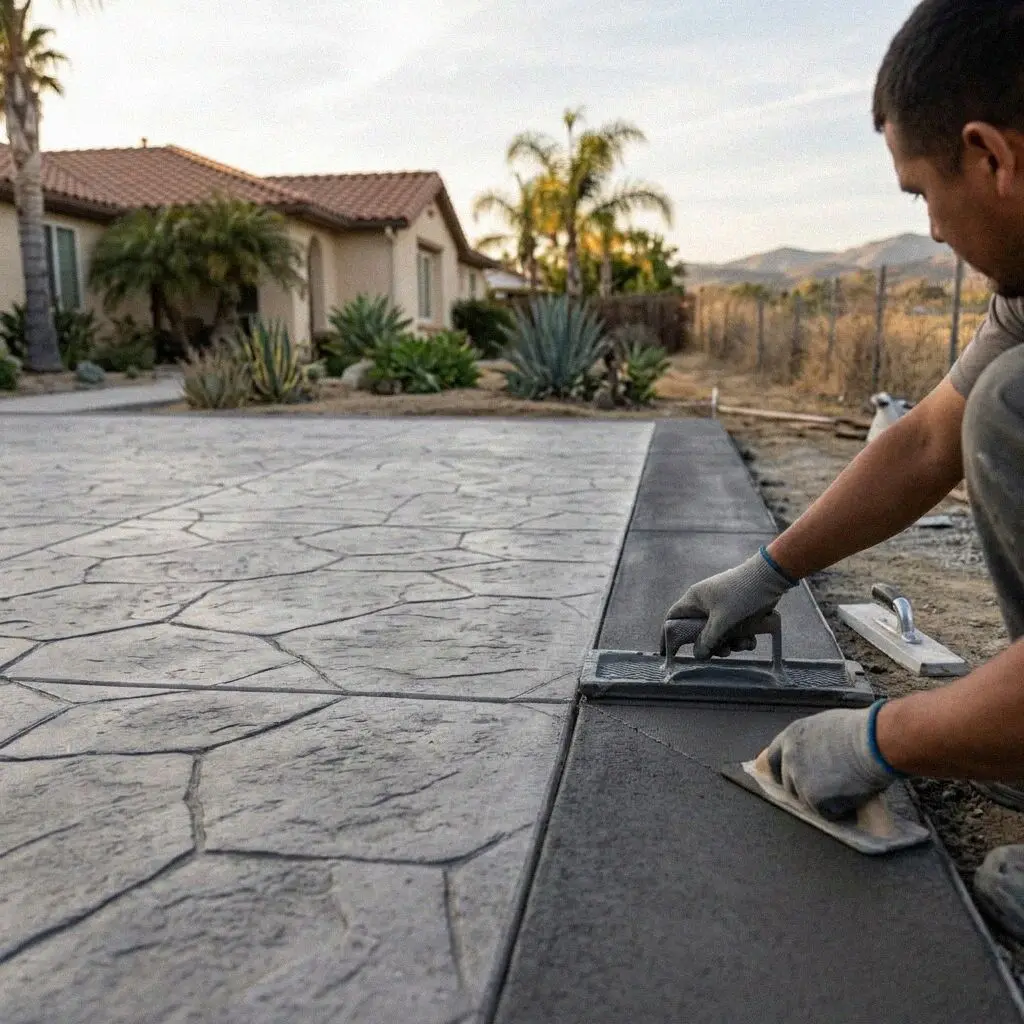
Hands setting a texture mat on colored fresh concrete in Costa Mesa

How a stamped slab is built here

Stamping a Patio on a Costa Mesa Ranch House Lot

A stamped slab is the one piece of concrete on a property that cannot be repaired without it showing. A broom-finished patch on a broom-finished walk disappears in a season, but a crack across a flagstone pattern, or a panel poured again in a color mixed on a different day, stays visible for the life of the slab. So the job is decided under the surface. The pattern and the color take an afternoon, and the ground the pattern will sit on for 30 years is what the estimate is spent on.

Harbor Costa Mesa Concrete was started in 2019 by Julian Mercado after 15 years on crews across coastal Orange County, and he sets the first mat on every stamped pour himself, because the first mat fixes the line every one after it follows. Most stamped work here goes behind a 1950s or 1960s ranch house on the Eastside, in Mesa Verde or in Mesa del Mar, replacing the plain slab at the sliding door, and it is an owner's job in a city where most homes are rented.

The slab is 4 inches of 3,500 psi concrete over packed base, poured under a CSLB C-8 license with liability insurance on every job, and a stamped patio inside the lot line needs no permit under the California Residential Code. The pattern, both colors, the sealer and the joint plan are named on the estimate, so what is pressed into the slab is what you agreed to, and the finished work carries a written workmanship guarantee against defects in how it was built.


Replace or stamp over

When does a Costa Mesa yard call for stamped concrete?

The 1950s slab at the sliding door

The rear slab poured with the house is a plain gray rectangle at the door, 8 or 10 feet deep, often cracked into two or three plates and lower than a lawn topdressed around it for 60 years. It is too thin to stamp over and too small to keep, so it comes out whole.

Pavers with weeds in every joint

Pavers laid on sand in a damp coastal yard grow moss and weeds in the joints from November to April, and the sand under them washes toward the low corner until the rows dip. A stamped slab gives the same flagstone look in one piece, with no joint for anything to grow in.

An old stamp gone white and bare

A stamped slab sealed in the 2000s and never resealed goes two ways at once. The sealer turns milky where damp got under it, and the color wears off the high points where chairs drag. Stripping and recoloring rarely matches, and if the slab is cracked or thin it is repoured.

A crack running across the pattern

A crack that leaves the grout lines and cuts across a flagstone cannot be hidden. On a stamped slab it means the joints were cut too late or the base moved, and filling it leaves a straight gray line through the color. It is the sign that the next slab starts from the ground.

In every stamped slab

What Goes Into a Stamped Slab in Costa Mesa

Eight things come with every stamped pour and none is a separate line. Each is there because the slab cannot be patched afterward, so the base, the steel, the joints and the sealing are all done as though there is no second chance, because there is not.

The old slab comes out

The original patio is broken out and hauled the same day, and the pavers or the old stamp with it, down to the sand it was poured on.

A test hole at the corner

The sand is opened at the yard's low corner to see what was buried there, since a stamped slab settles first where the ground was never packed.

Sand and base compacted

The terrace sand is plate-compacted, then 4 inches of crushed base goes over it, and the plate is run again before a form board goes down.

Color hardener floated in

A shake-on color hardener is floated into the surface as the bleed water leaves, which is what holds the color on the high points of the pattern.

Steel at mid-depth

Welded mesh lifted to the middle of the slab, so a crack that does start stays closed and inside the grout line rather than opening across a stone.

Joints in the grout lines

Control joints are set out before the pour so each saw cut lands in a grout line at 8 to 10 feet, and the cut is made inside 12 hours.

Sealed once the slab dries

The release is washed off after 24 hours and the sealer goes on at 28 days, once the slab has given up the water a film would trap beneath it.

Walk-through and guarantee

We walk the slab with you against the estimate, pattern, color, joints and sealer, and the written guarantee is handed over before we leave.

Patterns and colors

Stamped Patterns for a Costa Mesa Yard, Compared

Four patterns we press most in this city, set against how they read from the back door, how they hide the joints a slab needs, what their grout lines look like and how they grip when wet. The slab under all four is the same, so the table is about the surface.

OptionReads asHides jointsGrout linesWet grip
Random flagstoneNatural stone from 10 feet awayWell, most cuts fall in a lineWide, irregular, tooled by handDeep cleft, grips wet
Ashlar slateCut slate in a running bondFully, the grid is the joint planStraight, on a 12 by 24 moduleShallow cleft, grit in the sealer
Seamless slate textureOne sheet of stone, no piecesNot at all, each cut showsNone, texture onlyLight, grit in the sealer
Cobblestone coursesSet stones, from any distanceWell, cuts run between coursesDeep, in straight coursesRounded tops, grips wet

Seamless texture takes the least labor to press and ashlar slate the most, and the cost of the four runs in that order. Cobblestone alone needs no grit in its sealer.

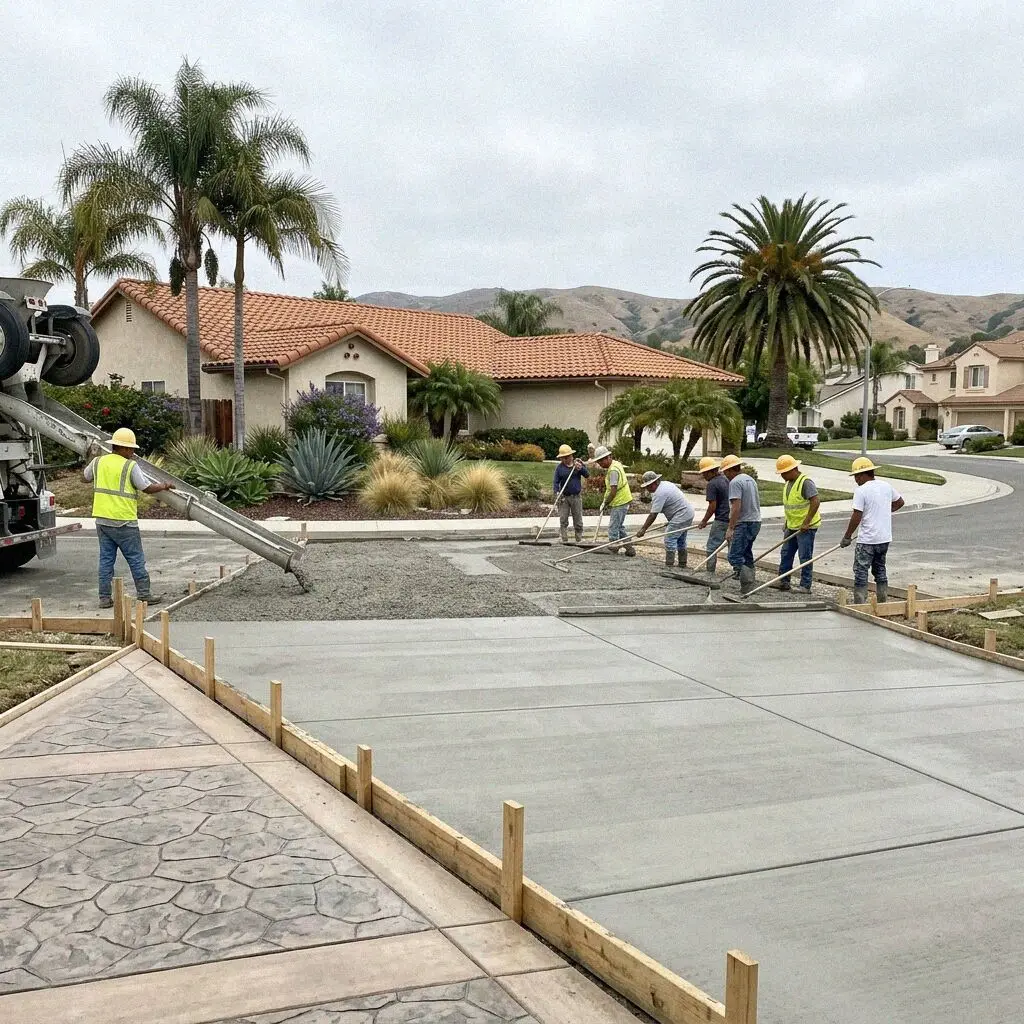
Crew at work on a stamped concrete patio behind a Costa Mesa ranch house

Sand and damp

Why a Stamped Slab Lasts on Costa Mesa Ground

The ground under this city is the reason a stamped slab is a fair bet here at all. It does not heave, and the only thing that moves it is what was left loose beneath it.

Inland, a stamped patio sits on clay that swells in a wet winter and shrinks by August, and a slab that cannot be patched is the wrong slab for that ground. Costa Mesa sits on terrace sand that holds its volume all year, so a slab stays where it was poured, provided the sand was packed first. Loose sand is the exception. In a yard laid out in 1958 it is where a tree came out and the hole was filled with what was handy, and a slab settles there within a winter.

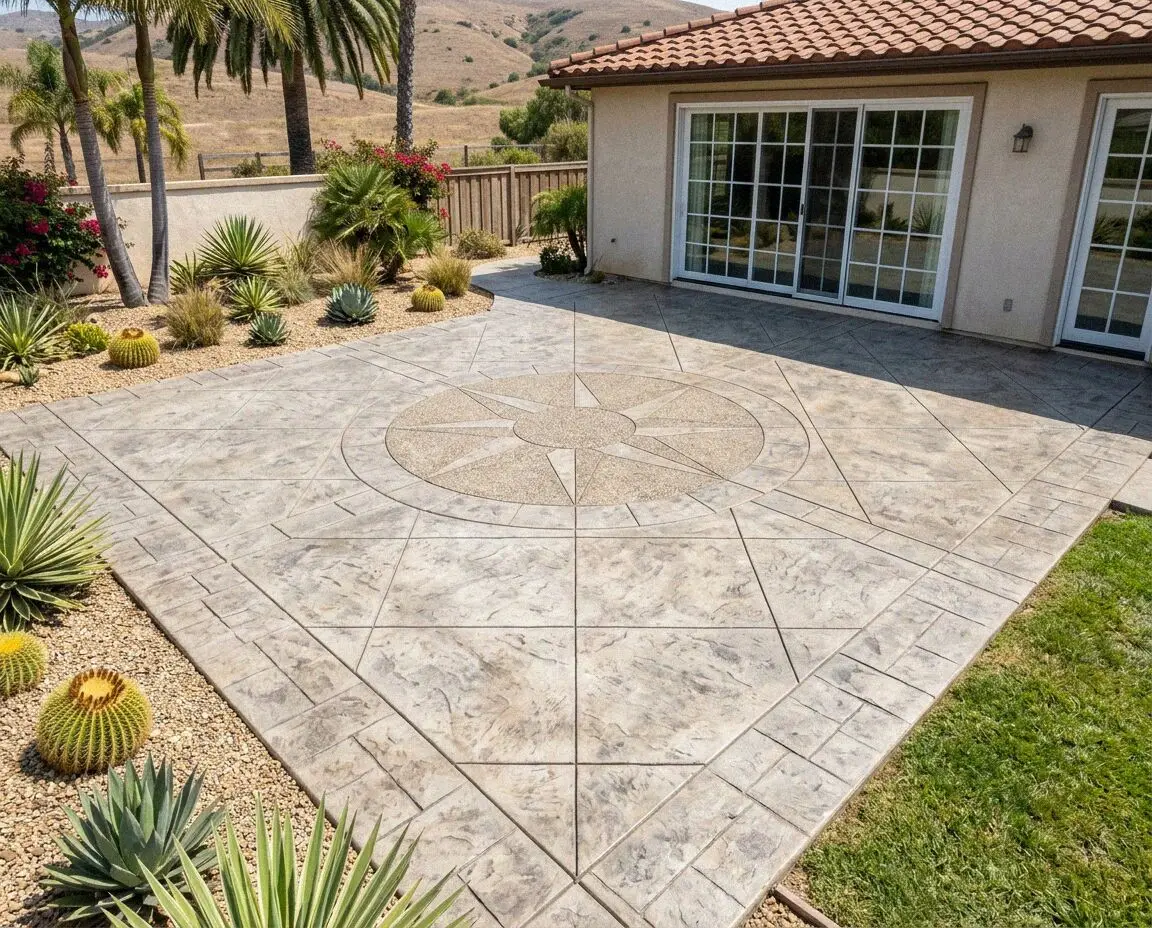
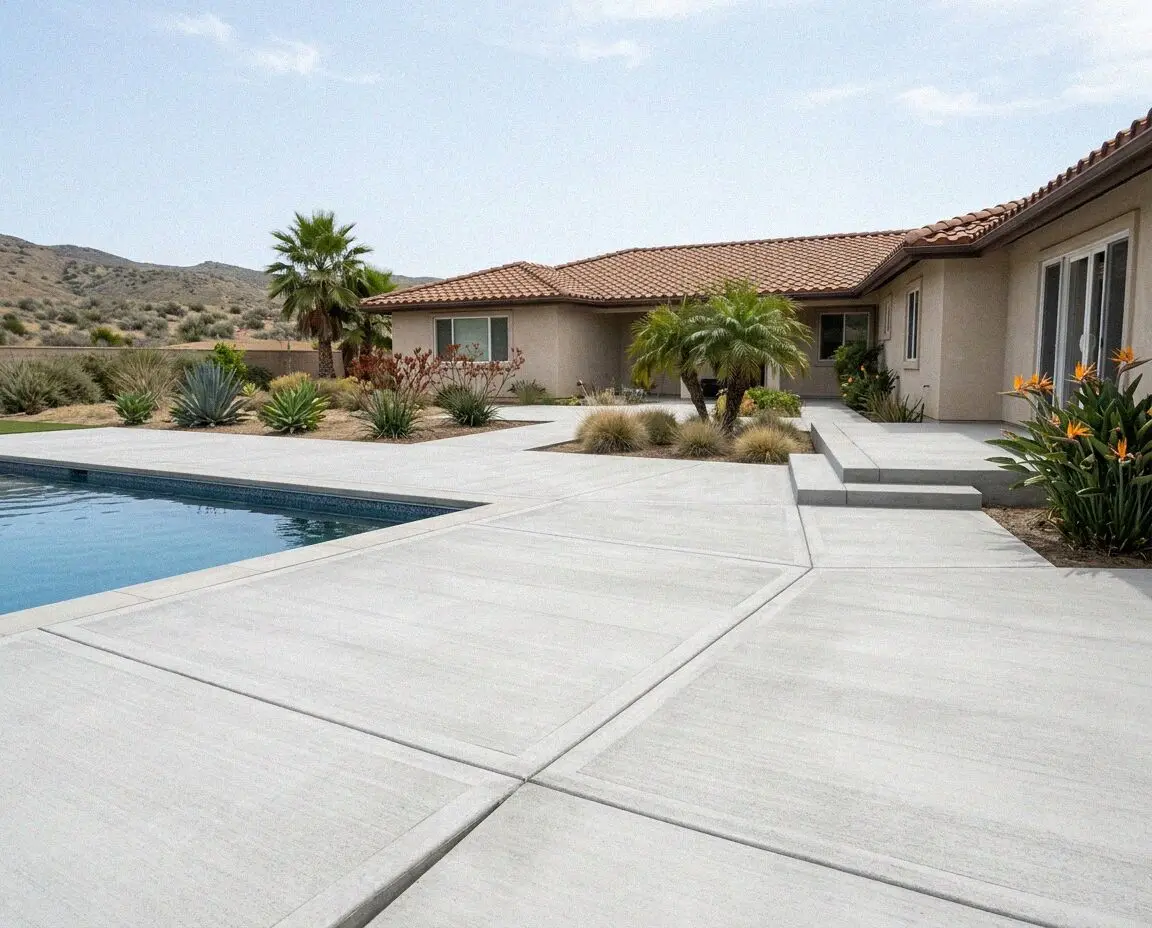
The damp is the second thing, and it works for the pour and against the sealer. Gray mornings from late spring through summer keep the surface open long enough to press a whole patio before the afternoon breeze dries it, so a slab here is rarely pressed against the clock. That same damp sits in the slab for weeks, and a sealer rolled on too soon turns white, so ours goes on at 28 days, once the slab has dried through. Where the slab meets the pool the same pattern runs over the deck.

From call to sealer

How We Build a Stamped Slab in Costa Mesa

Five stages, one crew, and the person who measures the yard sets the first mat. The pattern, the colors and the joint plan are settled on paper before anything is broken out, because none of them can change once the slab is pressed.

1

Measure and open the ground

Julian Mercado measures the yard, shoots the fall from the door to the lawn, digs a test hole at the low corner and writes the figure on the spot.

2

Choose pattern, color and week

You pick the pattern and both colors from samples pressed at your house, the joint plan is drawn onto the pattern, and a date is set.

3

Break out and compact

The old slab or pavers go to the crusher, the loose sand at the edges and over any old fill is dug out, and the subgrade is packed under a plate.

4

Base, forms, pour and press

Base compacted, forms set to the fall, the slab poured and colored, then pressed mat by mat from the house outward once it holds a thumbprint.

5

Cut, wash, seal and hand over

Joints sawn in the grout lines inside 12 hours, release washed off next day, the slab left to dry, then sealed at 28 days and walked through.

Behind the number

What Sets the Estimate on Stamped Work in Costa Mesa

Square footage starts the figure, the pattern and the number of colors move it, and what the test hole finds finishes it. The estimate shows how much of the figure is the surface. Every estimate is measured and written on site.

A ranch house rear yard

A patio at the sliding door of a 1950s tract house is a single rectangle with one border band, and the figure is mostly the surface.

A duplex or fourplex court

Stamped walks and a shared court on a rental property are measured per unit at a landlord's request, with the pattern carried across all of it.

A pool deck or a wraparound

A slab wrapping a pool or three sides of a house is pressed in sections on separate days, and the extra setups and the matching are in the figure.

Two colors and a border

A contrasting border band, a second release color or a hand-tooled edge each adds a pass over the slab, and each is its own line on the estimate.

The visit and the written figure cost nothing, the samples are pressed at your house, and the call to book it comes within 1 business day. (949) 541-4812 or send us a message.

Ready to see a pattern pressed in your Costa Mesa yard?

Send the form or call, and someone rings back within 1 business day to fix a time. Julian Mercado measures the yard, presses the sample patterns at your house and writes the figure before he leaves, and there is no signing on the day.

Request a Free Estimate

Written on site · No obligation

By submitting, you agree to our disclosure and consent terms, including being contacted by Harbor Costa Mesa Concrete.

Slabs we stamped

Three Costa Mesa Stamped Slabs, in Their Owners' Words

Three reviews left on Google, Facebook and the BBB, each about a stamped slab rather than a plain one, and each naming the pattern that was pressed or the yard it went into.

Google review

“Our Mesa Verde patio was the original 1962 slab, cracked in three. They took it out, packed the sand, poured 320 square feet in a random flagstone with a charcoal border and every saw cut landed in a grout line. Two winters on and there is not a mark across a stone.”

Dana W. of Mesa VerdeFlagstone patio replacement · Google · 2025
Facebook review

“We had pavers behind our College Park house that had sunk at one corner and grew weeds all winter. Julian pressed an ashlar slate over 400 square feet, waited the full four weeks before he would seal it, and the color has held through a full summer of sun.”

Marcus T. of College ParkAshlar slate patio over old pavers · Facebook · 2024
BBB review

“The stamped deck around our Eastside pool had gone milky white and the color was worn off along the coping. They repoured the deck in cobblestone with a rounded edge at the water, cut the joints between the courses, and the surface grips wet feet in a way the old one never did.”

Renee K. of the EastsideCobblestone pool deck · BBB · 2023

Before you book

Stamped Concrete Questions Asked in Costa Mesa

What moves the figure on a stamped slab, how long the yard is out of use, what the estimate includes, when the City is involved, and what is guaranteed once the sealer is on, answered for a yard here.

(949) 541-4812
  • What makes a stamped slab estimate larger than plain?

    The surface, and how many passes it takes. The slab under a stamped patio is the same 4 inches on the same base as a broom finish, so the difference is the color hardener, the release, the pressing, the sealer and the extra hands on the day, since a slab has to be pressed in the hour or two it is ready. A second color, a border or a tooled edge each adds a pass, and each is its own line on the estimate.

  • How long is a stamped patio out of use?

    About a month from the pour to the sealer, and the slab is in use well before that. The crew is on site two to three days, then the pour and the pressing take one morning. You can walk on the slab after 48 hours, when the release is washed off, and furniture goes on after seven days. The sealer goes on at 28 days, once the slab has lost the water a film would trap, and it needs a day before the chairs go back.

  • Does the estimate include sealing and the border?

    Yes to both, and to the removal of what is there now. The written figure covers breaking out the old slab or lifting the pavers, the compaction, the base, the mesh, the concrete, the color hardener and release, the pressing, the saw cuts, the wash and the first sealer coat, and a border band if the pattern takes one. What sits outside it is named at the visit, most often steps down to a lower lawn.

  • Do I need a permit for stamped concrete in Costa Mesa?

    Not for a patio, a walk or a pool surround inside your lot line, because the California Residential Code leaves flatwork on private ground alone whatever is pressed into it. The City comes into it in two places. A stamped approach at the curb takes the City's encroachment permit like any other, and a stamped deck around a new pool is inspected as part of the pool permit. We say at the visit whether either applies.

  • Will insurance pay to replace a failed stamped patio?

    Almost never for a patio that has cracked, faded or gone white over the years, because policies treat all three as wear. A claim arises for a sudden event, a car through a fence and across the slab, or a burst pool line washing the base out from under a deck, and then the carrier pays to repour rather than patch, since a stamped slab cannot be matched in part. Photograph it before anything is broken out.

  • What is guaranteed on a stamped slab in Costa Mesa?

    How it was built. The compaction, the base, the thickness, the mesh, the joint spacing, the hardener floated in and the sealer applied to a dry slab, with those terms on the estimate before you sign. The work carries a written workmanship guarantee against defects in how it was built. Fading, wear where chairs drag, moss in the shade and an old sealer are not build defects. Where the fault is ours we return.

  • What color hardener, release and sealer do you use?

    A dry shake color hardener floated into the surface of a 3,500 psi mix, a powdered antiquing release in a second color that sits in the low points of the pattern, and a penetrating sealer on most slabs, with a breathable coat on a patio shaded through the winter. The pattern is pressed from polyurethane mats. Product names and both colors are written on the estimate so what arrives can be checked against it.

  • Do I need to be home while the slab is pressed?

    For the measurement, for choosing the colors from the samples pressed at your house, and for the walk-through at the end. The pressing itself is better done without an audience at the sliding door, since the crew has one window to work in and the slab is the only way across the yard that morning. Between those days the crew needs water, an unlocked side gate and the dog kept in.

Towns we stamp in

Stamped Concrete in the Towns Around Costa Mesa

The eight nearest towns on the list, with the straight-line distance from the office on Newport Boulevard beside each. Samples are pressed at your house, and every stamped slab is measured there before a figure is written.

Show All Areas We Serve

Book a free measure for your Costa Mesa stamped slab

Call or send the form and you hear back within 1 business day. Say roughly how big the slab is and whether there is a pool or a step in it, and the visit, with the sample mats in the truck, is booked for a day inside the same week.