Serving Costa Mesa, CA and surrounding areas.(949) 541-4812
Harbor Costa Mesa Concrete

Decorative Concrete in Costa Mesa, CA, Chosen for Grip Under the Marine Layer

Harbor Costa Mesa Concrete pours exposed aggregate, salt and sand finishes with the color through the batch, because a surface here is wet most mornings. Every estimate is measured and written on site.

Google reviewsFacebook reviewsBetter Business Bureau reviews5.0 Stars Rated by our customers · Google, Facebook and the BBB
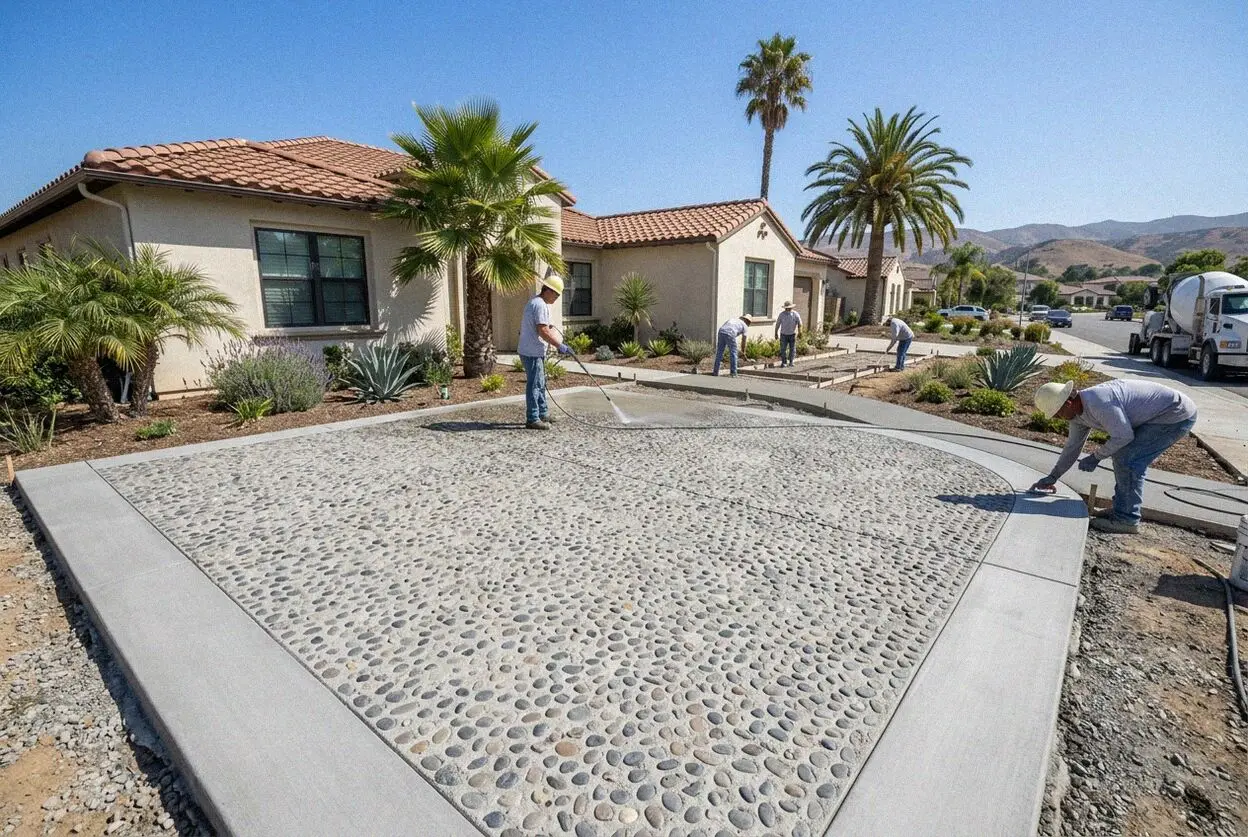
Crew washing exposed aggregate on a new patio at a Costa Mesa ranch house
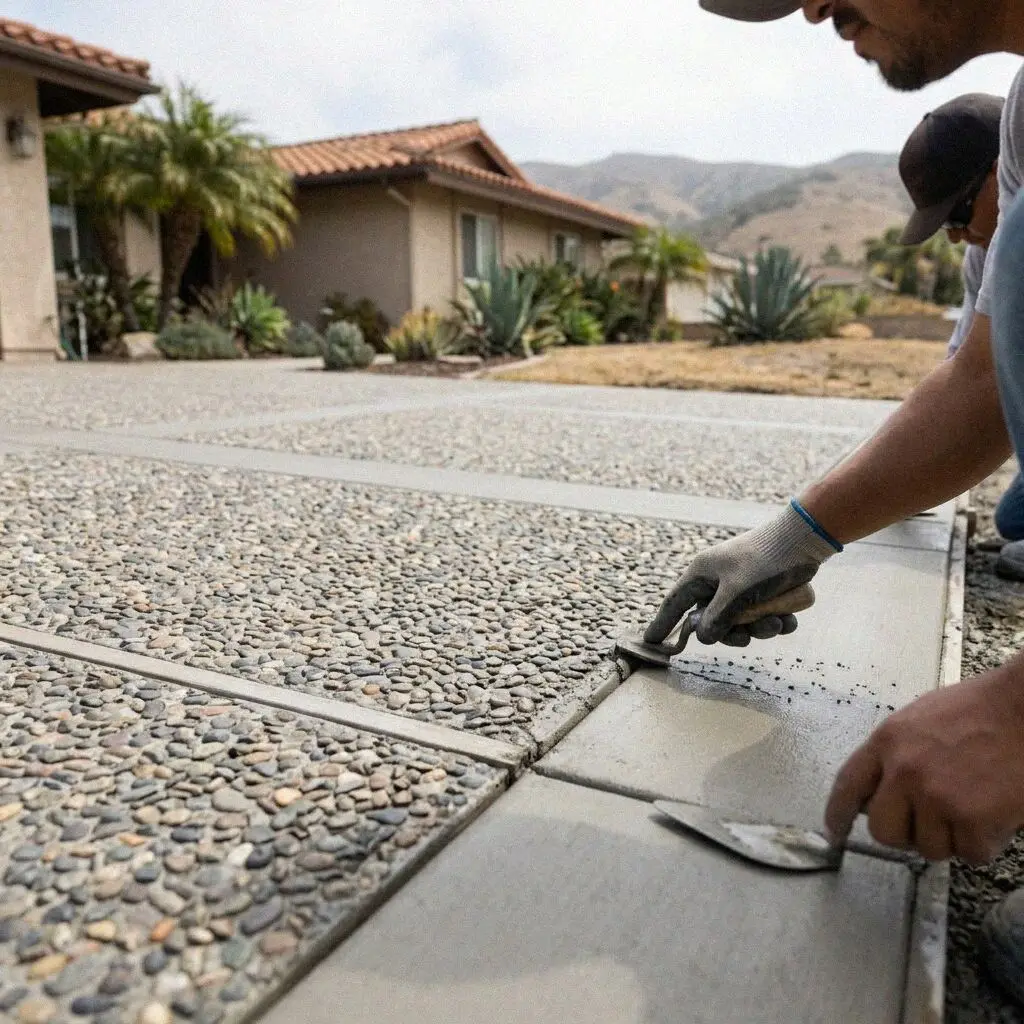
Hands brushing retarder off fresh exposed aggregate in Costa Mesa

Finish and fog

Pouring a Decorative Surface on a Costa Mesa Lot

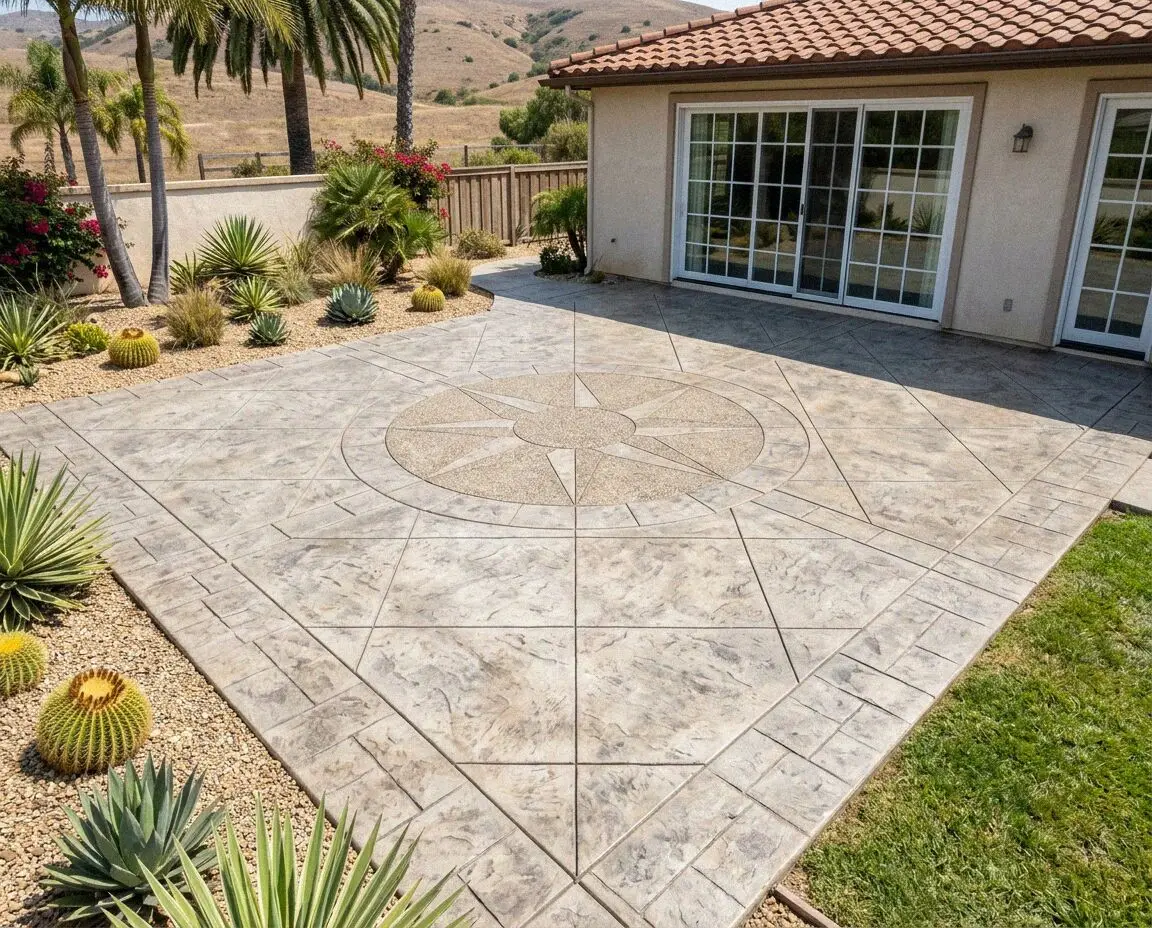
A decorative surface on this coast is judged wet before it is judged dry. The marine layer leaves a film of water on every walk and patio most mornings through the summer, and in winter a north-facing yard stays damp for days, so a finish that looks right in a photograph can be a skating rink at the front door. Exposed aggregate, a salt finish and a washed sand surface all keep their grip wet, because the texture is the stone and the pits rather than a coating.

Harbor Costa Mesa Concrete was started in 2019 by Julian Mercado after 15 years on crews across coastal Orange County, and he tools the borders on every decorative pour himself. The color goes through the whole batch as an integral pigment rather than dusted onto the top, so a chip off a corner shows the same color underneath. The sealer is a penetrating one that leaves the texture as it was, never an acrylic film that fills the pits and goes glassy in fog.

The work is done under a CSLB C-8 license with liability insurance on every job. A patio, walk or courtyard inside the lot line needs no permit under the California Residential Code, but a parkway walk or an aggregate apron at the curb is in the public right-of-way and takes an encroachment permit from the City of Costa Mesa, which we pull and stand for at inspection. Every surface carries a written workmanship guarantee against defects in how it was built.

Reading the old surface

When does a Costa Mesa patio or walk need redoing?

Slick on a foggy morning

A smooth troweled slab, or any surface under an old acrylic sealer, turns to glass under the marine layer and stays that way until the sun burns through. If someone has slipped at the front door in June, the surface is the wrong finish for this coast and no cleaning changes that.

Color gone in the traffic lines

A dusted-on color hardener wears to gray in the line from the gate to the door and along the pool edge, leaving pigment only where nobody walks. That layer is a sixteenth of an inch thick and cannot be renewed. Integral color is the same all the way through, and it replaces it.

Green in the shade all winter

Moss and algae on the north side of the house from November to March are the surface holding water, either in pits the sealer has stopped protecting or under a film that has lifted. Pressure washing takes the green off and opens the surface, so it comes back darker next winter.

Stones lifting out of the walk

Pebbles coming loose from an exposed aggregate walk, leaving sockets that fill with water, mean the retarder was left too long and the wash went too deep, or the mix was too lean to hold the stone. The sockets spread with every wet winter, and no patch matches old aggregate.

Standard on every pour

What a Costa Mesa Decorative Pour Includes

Eight things are in every decorative surface as standard, and each answers one of the two conditions here, a surface that is wet on most summer mornings and a 1950s or 1960s house whose walks and patios were poured with the tract.

Old surface out to sand

The worn slab is broken out to the sand and hauled the same day rather than overlaid, because an overlay fails at the first crack beneath it.

Sand compacted in passes

The mesa sand under the old walk was never compacted, so it is plate-compacted before base goes on, the one fix a 1960s pour never had.

Base and a fall to lawn

Four inches of compacted base, graded so the finished surface sheds water away from the house at a quarter inch to the foot.

Color in the whole batch

Pigment is dosed into the truck at the plant, not dusted on top, so the color is the same at the bottom of a chip as at the surface.

Stone picked for wet grip

Rounded 3/8 inch pebble for a patio walked barefoot, angular stone for a driveway apron, and the sample panel is hosed before you choose.

Borders tooled by hand

A smooth banded border around every exposed or salted field, so the texture ends on a clean line and the joints have a place to run.

Washed at the right hour

The retarder is washed off when the surface will just hold a thumbprint, so the stone stands a third proud and no more, and never comes loose.

Sealed open, guaranteed

A silane sealer that soaks in and leaves the texture open, applied at 28 days, then the written guarantee is handed over at the walk-through.

Four finishes

Costa Mesa Decorative Finishes, Compared

Four finishes for a patio, a walk or a courtyard on a lot here, set against what each is like wet, where its color sits, and how it takes a shaded winter. The base, the fall and the joints are the same under all four, so the table is the surface alone.

OptionSuitsWet underfootWhere the color isShade and moss
Exposed aggregateA 1960s ranch patio or front walkFull grip, the stone is the textureIn the stone itself, never fadesHose it twice a winter
Salt finish, coloredA pool surround or a courtyard walked barefootGrip from the pits, soft underfootThrough the batch, the same at any depthPits hold damp, resealed when they darken
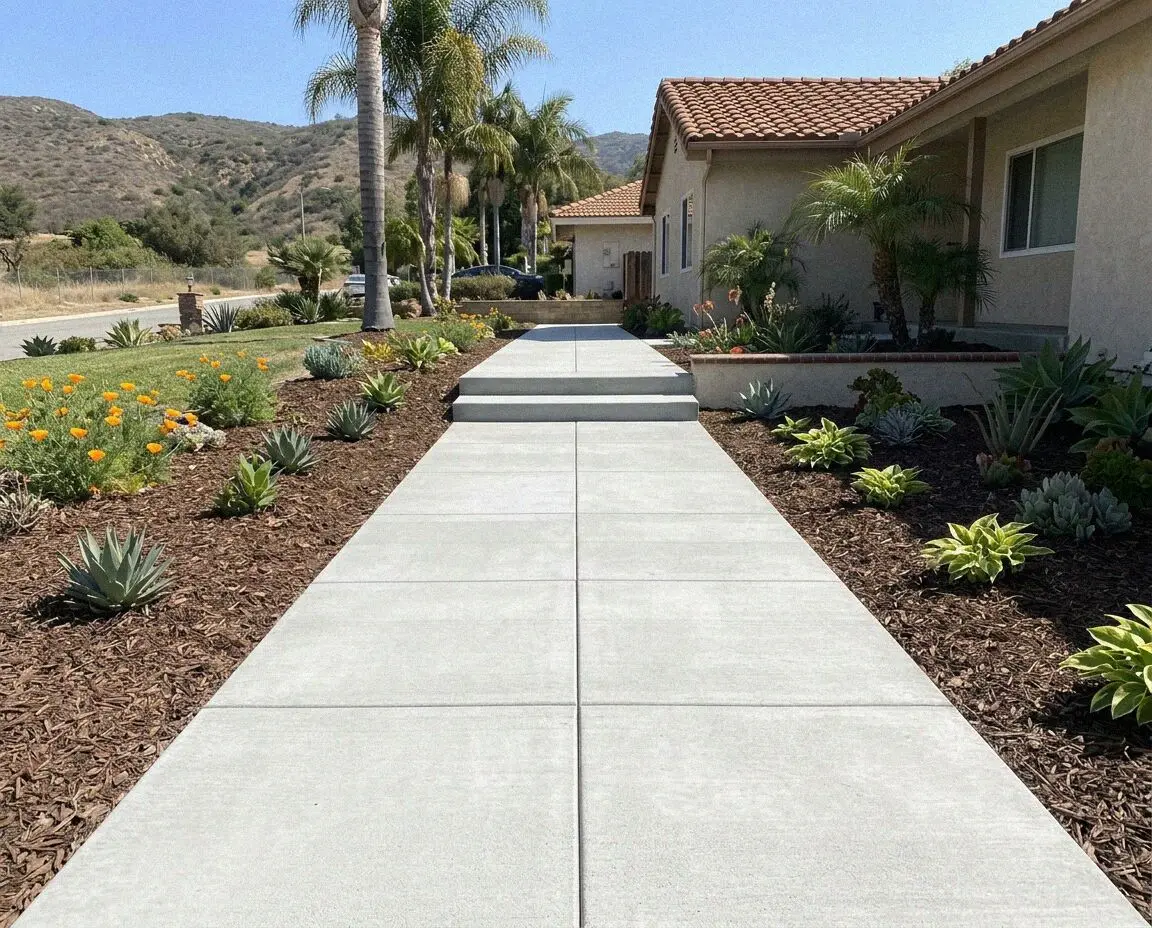
Washed sand finishA front entry or a courtyard off the streetFine grip, like a public sidewalkThrough the batch, tone set by the sandDries fastest of the four
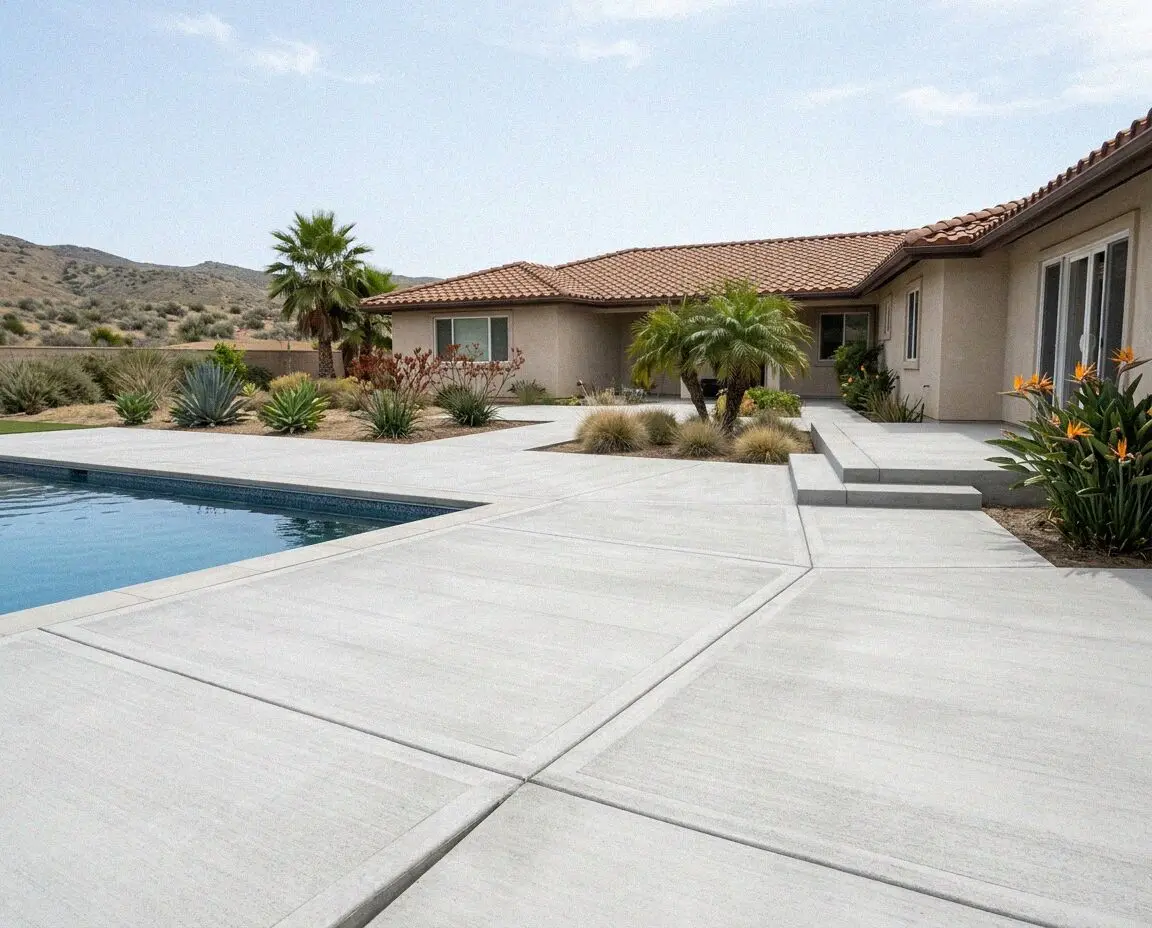
Colored broom with a bandA driveway or a side yard the bins crossFull grip at any angleThrough the batch, broom lines hide wearNo pits to hold the damp

Exposed aggregate and a salt finish are the least work to lay and the most to keep clean; a sand finish is the reverse; a colored broom sits between them on both.

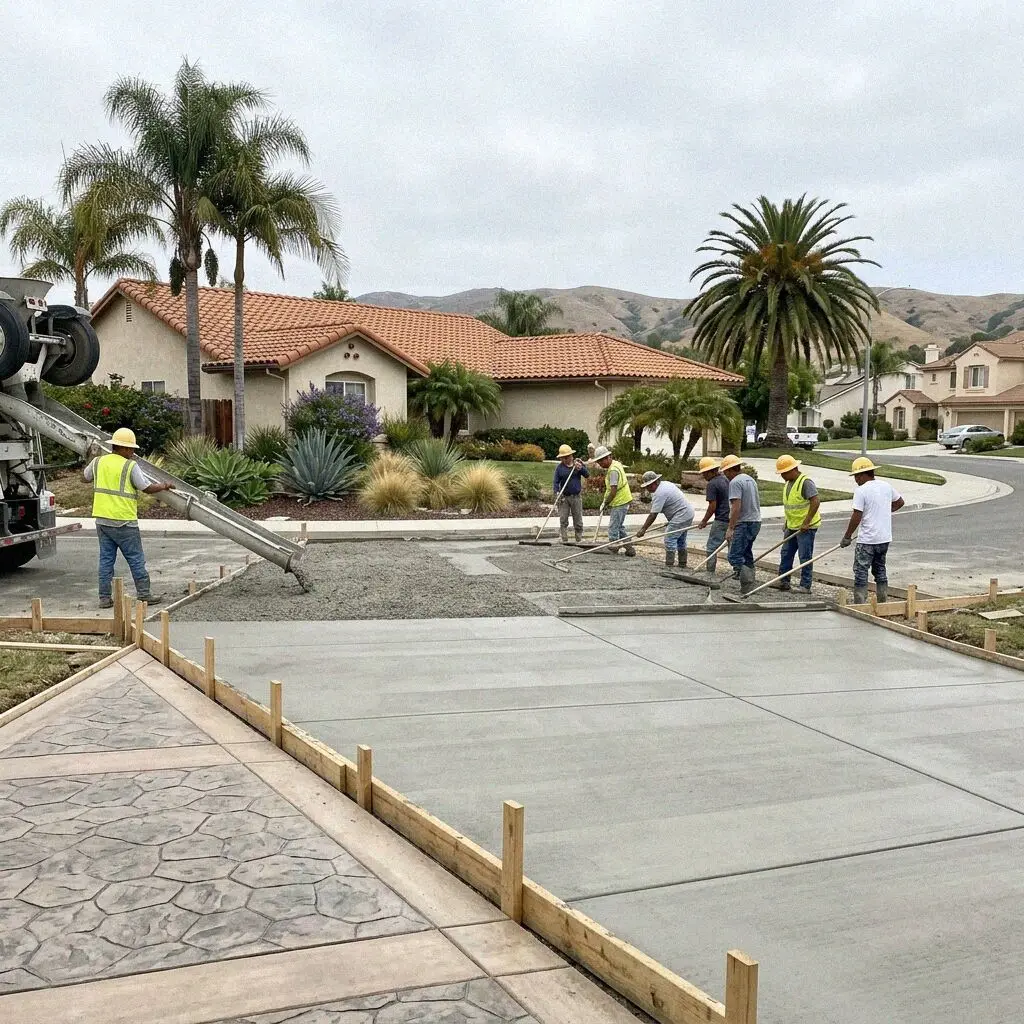
Concrete crew finishing an exposed aggregate patio at a Costa Mesa home

Fog and the tract

Why a Costa Mesa Finish Is Chosen Wet

A decorative surface here is picked by two things before anyone opens a color chart, a marine layer that wets it most summer mornings and a 1960s house whose walks were aggregate from the start.

The marine layer comes in off the water at night and sits on the mesa until late morning through the summer, leaving every outdoor surface filmed with water at the hour people leave the house. A troweled or film-sealed surface is at its most dangerous then, which is why the finishes that suit this coast are the ones whose grip is in the material, stone proud of the matrix, the pits a salt finish leaves, the tooth of washed sand. The damp also means no pour is raced by heat.

The house is the second. The tracts that fill Mesa Verde, Mesa del Mar and the State Streets went up when exposed aggregate was the finish of the day, and many front walks here still carry the original pebble, worn and sunk. A new pour beside one is matched to it, stone size and color, not replaced with a pattern the house never had. On the older Eastside lots and the Westside fourplex courts, a sand finish or a colored broom with a band replaces a surface that was plain to begin with.


From sample to sealer

How We Pour a Decorative Surface in Costa Mesa

Five stages, one crew, and the finish is chosen off a sample panel hosed down in front of you, because a decorative surface here is going to be judged wet for the rest of its life.

1

Measure, and hose the samples

Julian Mercado measures the area, checks the fall to the house, lifts a corner of the old slab to see the sand, and wets three sample panels.

2

Pick the finish and the date

You choose the finish, the stone or the pigment and the border off the wet samples, and take a date. Right-of-way work is filed first.

3

Break out and compact

The old surface goes to the crusher, tree roots and old planter fill come out, and the sand is plate-compacted before the base goes in.

4

Base, forms, pour and finish

Base graded to the fall, forms set, the colored batch placed and the finish worked, retarder and wash, salt pressed and rinsed, or sand washed.

5

Joints, cure, seal, hand over

Joints cut in the border lines, the slab cured damp for seven days, the penetrating sealer applied at day 28, and the surface walked through.

Behind the figure

What Moves the Estimate on Costa Mesa Decorative Work

The finish sets the figure less than the area and what is under it. An aggregate walk over old planter fill and one over compacted sand are different days of work, so nothing is priced from a photo. Every estimate is measured and written on site.

A ranch house patio or walk

A rear patio or a front walk on a 1960s lot is one pour. The area, the borders tooled by hand and the roots under the old walk set the day.

A fourplex court or path

Shared paths and a court between units are poured in halves so tenants keep a way in, and a landlord gets each building's surface on its own line.

A pool surround or a courtyard

Coping, steps and a drain line to work around, plus a finish that has to grip barefoot and wet, make the forming and the tooling the larger part.

Seeded stone and two colors

A seeded pebble field with a contrasting border, or two pigments in one pour, adds a second batch and a second day of finishing, priced as such.

The visit, the wet sample panels and the written figure are free, and the call to book the visit comes within 1 business day. (949) 541-4812 or send us a message.

Ready to see your finish wet before you choose?

Send the form or call, and someone gets back to you within 1 business day to set a time. Julian Mercado measures the area, hoses three sample panels on your own walk and writes the figure at the house, and it is yours to keep.

Request a Free Estimate

Written on site · No obligation

By submitting, you agree to our disclosure and consent terms, including being contacted by Harbor Costa Mesa Concrete.

Surfaces we poured

Three Costa Mesa Decorative Pours, in Their Owners' Words

Three reviews from Google, Facebook and the BBB, each about a decorative surface rather than a plain slab, and each naming the finish chosen and what it is like underfoot on a wet morning.

Google review

“Our Mesa Verde front walk was the original 1964 aggregate, sunk and half the pebble gone. Julian matched the stone size off a sample, poured 90 feet of walk with a smooth border and it looks like the house was built with it. First foggy morning, nobody slid on it.”

Dana W. of Mesa VerdeExposed aggregate front walk · Google · 2025
Facebook review

“We had a troweled patio behind our Eastside house that was a skating rink every June morning. They broke it out, poured 400 square feet with an integral tan and a salt finish and sealed it a month later. It has been through a whole winter and the shaded end stayed clean.”

Luis A. of the EastsideSalt finish patio, integral color · Facebook · 2024
BBB review

“The courtyard path between the four units at my Westside building had color hardener worn to gray down the middle. New sand finish pour, color through the mix, done in two halves over four days so the tenants always had a way in. Two years on and the color is even end to end.”

Ruth M. of the WestsideFourplex courtyard path · BBB · 2026

Before you book

Decorative Concrete Questions Asked in Costa Mesa

What moves the figure on a decorative pour, how long the yard is out of use, when the City is involved, and what is guaranteed once the sealer is on, answered for a patio or a walk on a lot here.

(949) 541-4812
  • What decides the estimate on a decorative concrete patio?

    The area and the ground under it first, the finish second. Breaking out the old surface, compacting the sand and laying base is the same work whether the top is exposed aggregate or plain broom, and it is most of the day. The finish then adds its own lines, the stone or the pigment, the hand-tooled borders, a second color, and the sealer. All of it is measured at the house and written as separate lines.

  • How long before a new decorative patio can be used?

    Walk on it after two days, furniture after seven, and the sealer goes on at 28 days, after which it is finished. The crew is on site two to three days, one to break out and compact, one to base and form, and the pour with its finishing on the third, with the wash or the salt rinse the same day. The month before the sealer is the concrete losing the water a sealer would trap, so it is not skipped for a party.

  • What does a decorative concrete estimate include?

    Everything from the old surface to the sealer. Breaking out and hauling the old walk or patio, compacting the sand, the base, the forms, the colored batch, the finish, the borders, the saw cuts, the cure and the penetrating sealer at 28 days are each a line on the estimate. Named at the visit rather than added later are tree roots under the old slab, a drain to be moved, or a permit fee for a walk in the parkway.

  • Is a permit needed for a decorative patio in Costa Mesa?

    Not for a patio, walk or courtyard inside your own lot line; the California Residential Code exempts flatwork on private ground. A parkway walk between the sidewalk and the curb, or an apron at the driveway, is in the City's right-of-way and needs an encroachment permit from the City of Costa Mesa, and the inspector checks the finish meets the public walk at grade. We pull the permit and meet the inspector.

  • Will insurance cover a patio that has cracked or worn?

    Almost never. Wear, faded color, moss and a slab that has settled over decades are maintenance in any policy, and the owner pays. The claims that do get paid are sudden and named, a tree that came down across the patio in a storm, a vehicle that left the driveway and broke the walk, or a water main that washed the base out. Photograph it before anything is broken out and ask your carrier first.

  • What is guaranteed on a decorative concrete surface?

    How it was built and finished. The compaction, the base, the thickness, the joints, the pigment dose, the stone and the sealer on the estimate are covered by a written workmanship guarantee against defects in how it was built. Aggregate coming loose from a wash we timed or a border we tooled is ours to put right. Fading in a surface left unsealed, a stain, a tire mark and moss on a slab never hosed are not.

  • What stone, pigment and sealer go into the surface?

    A 3,500 psi ready-mix with the pigment dosed at the plant, rounded 3/8 inch pebble for exposed and seeded work with the stone shown to you wet before it is ordered, and a silane penetrating sealer rather than an acrylic film. For a salt finish the rock salt is coarse and pressed by hand; for a sand finish the surface is lightly washed to show the sand in the mix. Each is named on the estimate.

  • Do I have to be home for a decorative concrete pour?

    For the estimate, the sample panels and the walk-through, and not in between. The crew needs the yard cleared to the fence, a hose bib, the side gate unlocked and a way to the street for the wheelbarrows, and the retarder wash on an exposed pour sends gray water across the lawn for an hour, so pets stay in that day. If the surface is the only route to a door, it is poured in halves so there is a way through.

Nearby towns

Decorative Concrete Around Costa Mesa

The towns on the list, nearest first, with the distance from the office on Newport Boulevard beside each. A decorative surface in any of them is chosen off a wet sample at the house before a figure is written.

Show All Areas We Serve

Book a free wet sample on your Costa Mesa walk

Call or send the form and you hear back within 1 business day. Say which finish you have in mind and what the old surface is, and the visit with the sample panels can be set for a day in the same week.