Serving Costa Mesa, CA and surrounding areas.(949) 541-4812
Harbor Costa Mesa Concrete

Concrete Parking Lot Building in Costa Mesa, CA, Poured in Halves So Tenants Still Park

Harbor Costa Mesa Concrete takes out the asphalt a court or shop has patched since the 1960s and pours concrete on the sand beneath, half a lot at once. Every estimate is measured and written on site.

Google reviewsFacebook reviewsBetter Business Bureau reviews5.0 Stars Rated by our customers · Google, Facebook and the BBB
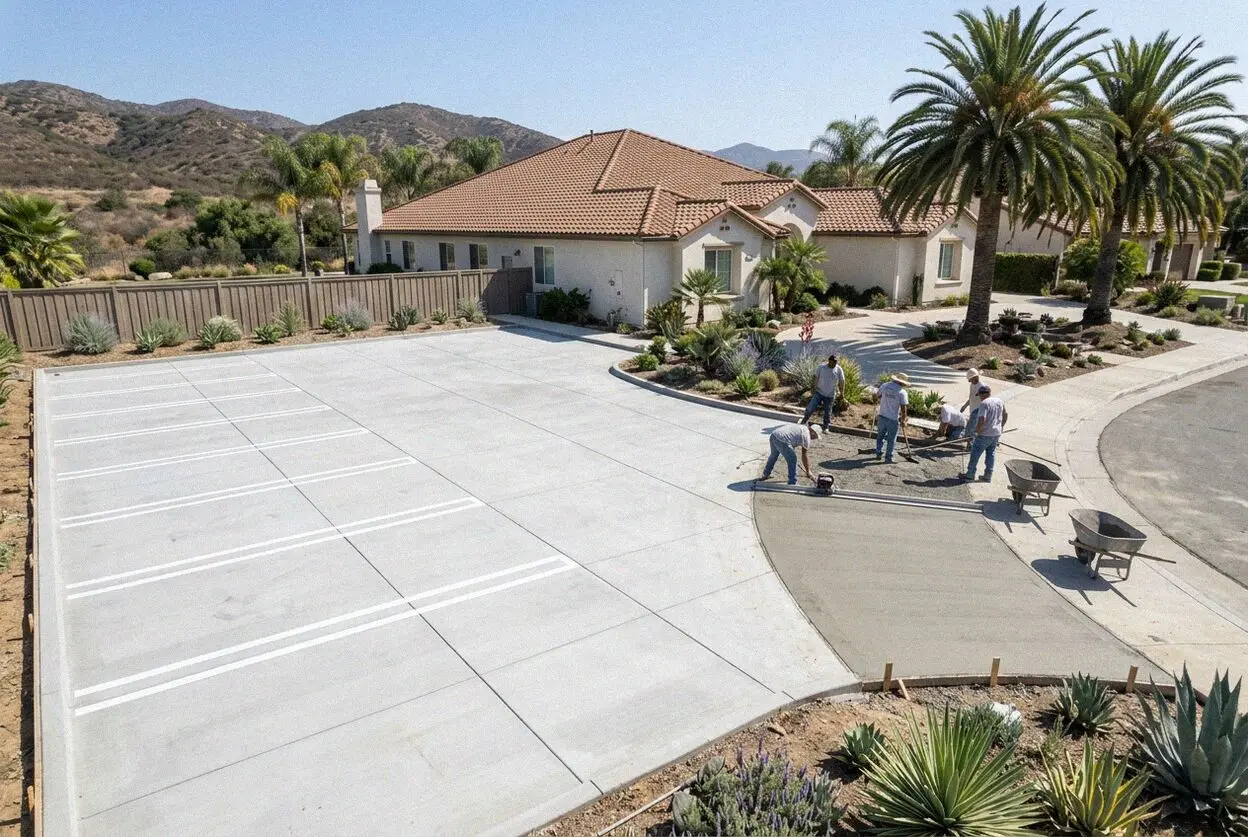
Crew pouring one half of a concrete parking lot behind a Costa Mesa court
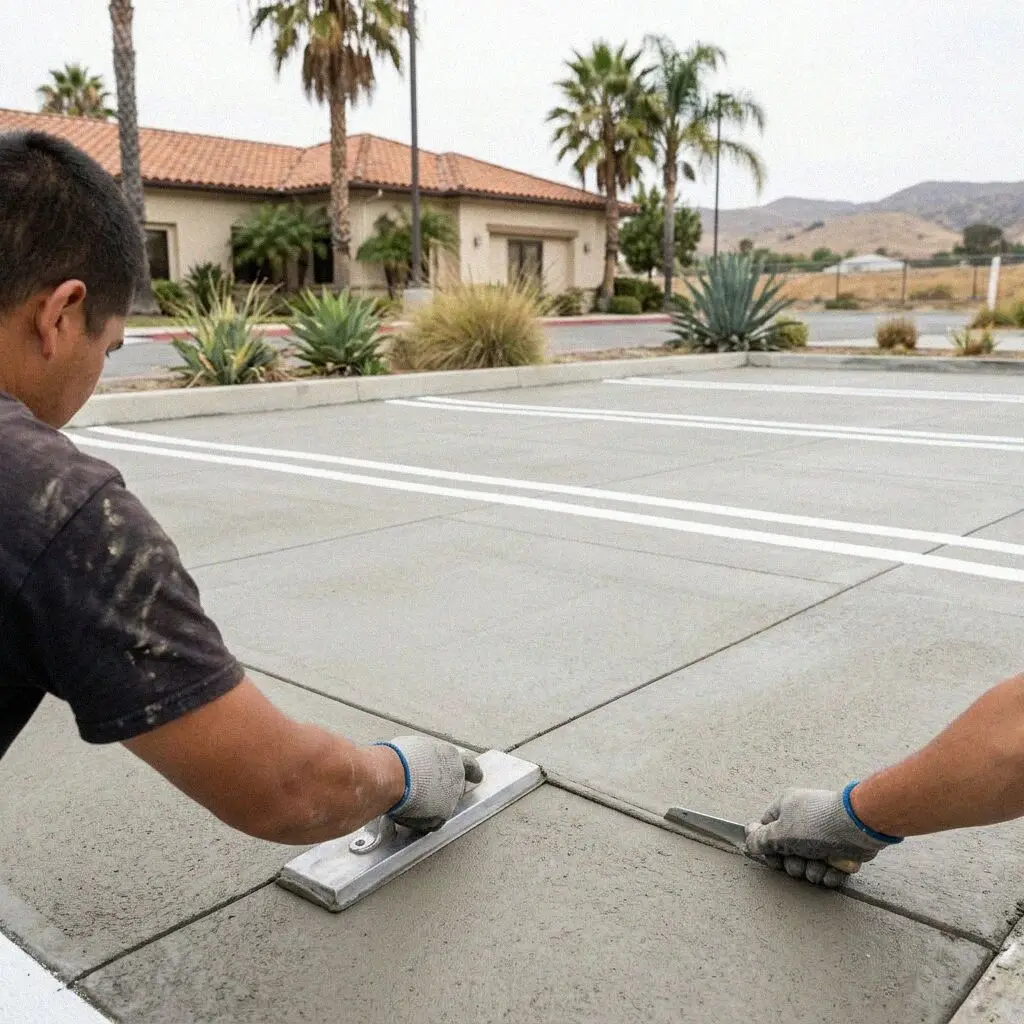
Bull float smoothing a fresh concrete parking bay at a Costa Mesa court

How a lot is rebuilt here

Rebuilding a Parking Lot Behind a Costa Mesa Court

A parking lot in Costa Mesa is usually somebody's home lot, not a store's. Most of the city rents, and most of the places it rents were built as courts and fourplexes in the 1960s with an asphalt lot down the middle that has been patched, sealed and patched again for sixty years. Concrete replaces it once, at 5 inches on the sand the asphalt sat on, and the tenants never lose their parking, because the lot is built in two halves and the cars move across as one half cures.

Harbor Costa Mesa Concrete was started in 2019 by Julian Mercado after 15 years on crews in coastal Orange County, a good part of it on asphalt-to-concrete jobs at Westside shops and apartment courts, and he runs the pour on every lot. The order of work is the same every time. The asphalt is milled and hauled, the sand under it is proved with a plate, gravel goes down, and the half with the trash enclosure is poured first so the refuse truck has a pad from the first week.

The lot is built under a CSLB C-8 concrete license, with liability insurance on every job, and a commercial lot goes through the City of Costa Mesa before the asphalt comes out, with the curb approach on an encroachment permit of its own. The accessible stalls are laid out to the state's count and slope before a form is set, since a stall at the wrong grade is rebuilt, not restriped. It carries a written workmanship guarantee against defects in how it was built.


Patch or replace

When is a Costa Mesa parking lot past patching?

Alligator cracks at the stalls

A web of cracks across a stall means the asphalt has lost its bond to the base and is flexing under every car that parks there. Filling the cracks stiffens nothing beneath them, so the web opens again by the next winter, and the sealcoat that follows hides the pattern for a season.

Ruts where the refuse truck stops

Two shallow troughs in the drive aisle at the trash enclosure are the marks of one truck that stops there every week. Asphalt creeps under a standing wheel, and on a warm afternoon the ruts deepen a little more. They hold water after rain, and water in a rut is the base going soft.

Potholes opening at the patches

A pothole at the edge of an old patch is the patch letting go. The new asphalt never bonded to the old, and the seam let rain into the sand, which washed a little out at each storm. Once the hole is through to the base it grows with every car, and a tenant reports it as a flat tire.

Water standing at the enclosure

A puddle that stays at the trash enclosure or the low corner two days after rain means the lot has settled and the fall the asphalt once had is gone. The water sits on the base, the base softens, and the truck standing in it drives the wheels through. An overlay would sink the same.

In every lot

What Goes Into a Costa Mesa Parking Lot

Every lot gets these eight, none of them a separate line, and each one answers something a court or a shop lot here does. It has to stay open while it is rebuilt, its sand base is good once it is compacted, and one truck a week does more to it than the cars.

Asphalt milled and hauled

The old asphalt is milled off down to the sand and hauled to a recycler the same day, half the lot at a time, so the other half keeps its cars.

Sand proved under a plate

The sand beneath is plate-compacted and any soft spot where a patch let water in is dug out and refilled, so the base is tested before forms go up.

Gravel base, compacted

4 inches of crushed gravel compacted over the sand, so the load spreads and the sand stays put under the slab instead of settling into ruts.

Thickened at the truck

The drive aisle and the pad at the enclosure are poured at 6 inches on rebar, the rest at 5, because the refuse truck is the one load that matters.

Fall built to the drain

The slab is graded to the catch basin or the gutter at 1 to 2 percent, checked with a level on the forms, so no corner holds water after a storm.

Joints on a 12-foot grid

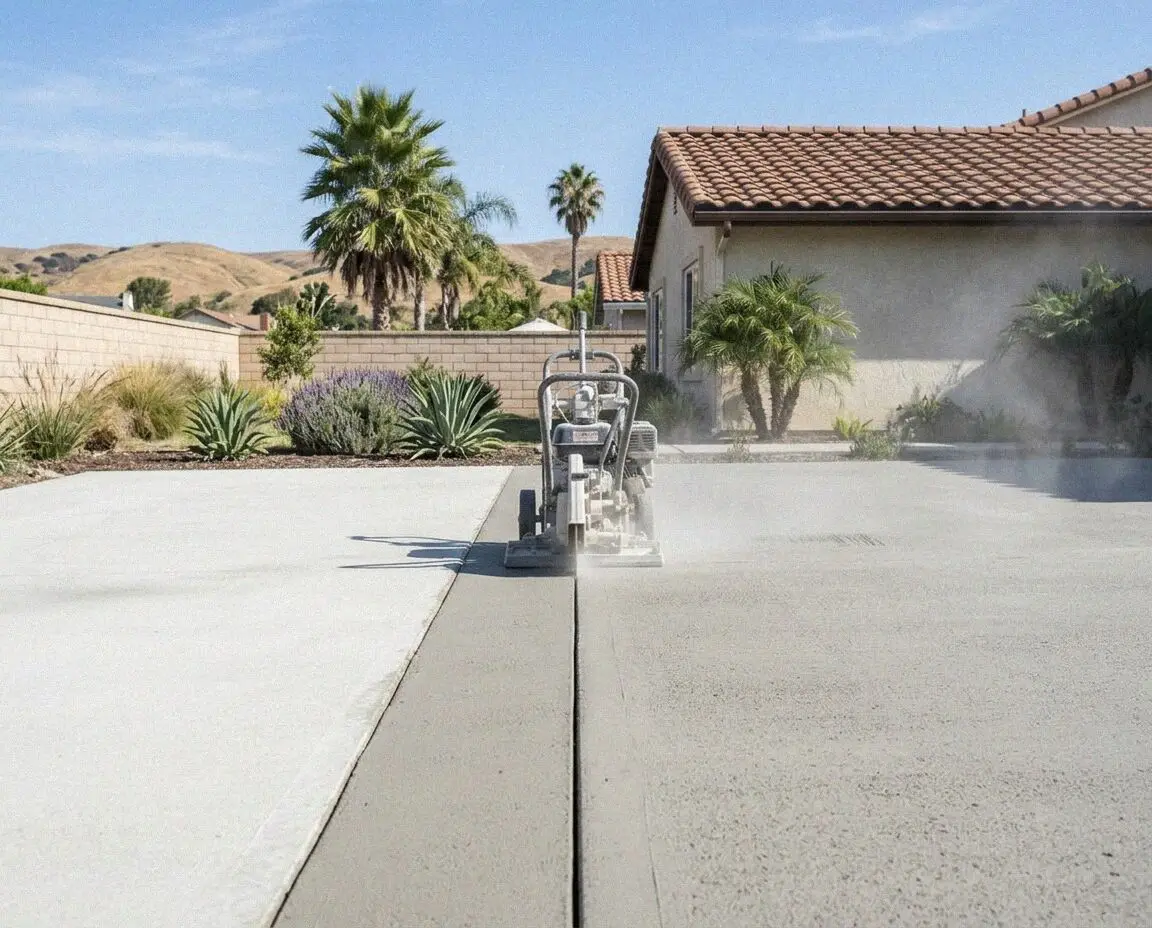
Saw cuts go in the day of the pour at 12 feet on a 5-inch slab, laid out so the stall lines land on joints and the cracks stay hidden inside them.

Accessible stalls to grade

The accessible stalls and their aisle are set at 2 percent or flatter both ways and checked before the pour, since a restripe cannot fix a slope.

Striped and guaranteed

The stalls are painted once the surface has cured, the lot is walked with you against the estimate, and the written guarantee is handed over.

How it can be built

Costa Mesa Parking Lot Builds, Compared

Four ways to build a lot on the sand here, set against what parks on it and how long it can be closed. The base and the joints are the same in all four, so the table is about the slab, the steel and the schedule.

OptionSuitsSteel in itLifeBack in use
5-inch lot, two halvesA court or fourplex where tenants park nightlyFiber in the mix, rebar at the aisle30 to 40 yearsHalf stays open; 7 days per half for cars
6-inch lot throughoutA shop or dealer lot with delivery trucks dailyNumber 4 rebar on a mat35 years or more28 days before trucks
Truck lane in an old lotA lot sound at the stalls, rutted at the enclosureNumber 4 rebar, doweled to the old slab30 years or moreStalls stay open; 28 days on the lane
Asphalt overlayA lot being sold or redeveloped within 10 yearsNone, wire mesh at most8 to 12 years over old asphalt2 to 3 days for cars

The 5-inch lot costs least to pour and the full 6-inch lot most, with the truck lane between them; the overlay is cheapest on the day and the one that is done again.

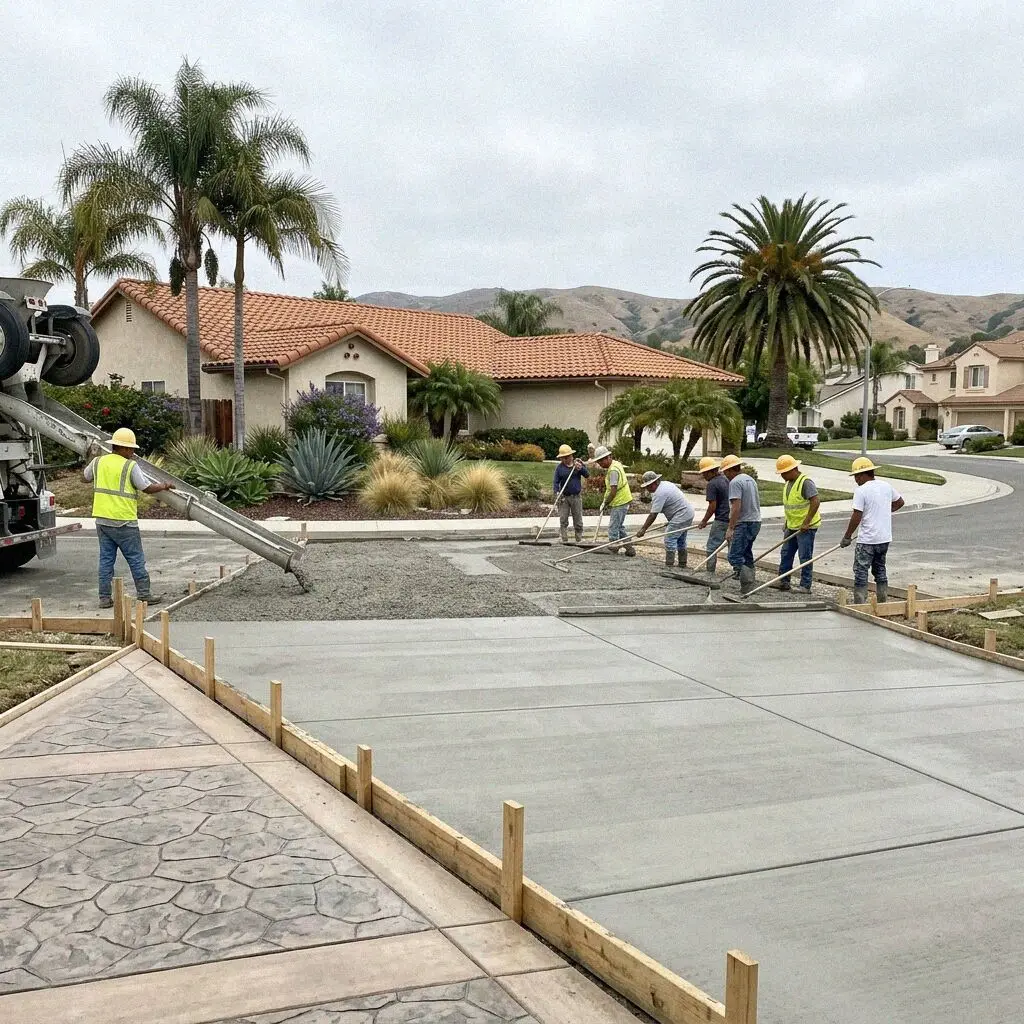
Concrete crew at work on a parking lot behind a Costa Mesa apartment court

Sand and tenants

Why a Costa Mesa Lot Is Poured in Halves

A lot here is set by who parks on it and by what is under the asphalt, and the second is the easy part. The sand is why the slab can be 5 inches, and the tenants are why it is poured twice.

The whole city sits on a raised marine terrace of sand and sandy loam that drains as fast as rain lands on it and never swells, so once it is plate-compacted it needs no thick section built over it. The exception is any spot where an old patch let water in for years, which is dug out and refilled before the gravel goes down. On the flats below the Westside bluff the sand is siltier and was regraded when the industrial streets went in, so the test holes there go deeper.

Tenants are the harder part. Most homes in Costa Mesa are rented, and a court of eight units has eight cars that come home every night to the lot being rebuilt, on a street already parked solid. So the lot is poured in halves, the enclosure half first, the cars moved across the day the joints are cut, and each tenant handed the dates a week ahead. A dealer on Harbor Boulevard gets the same halves. Where only the truck lane has failed we saw it out and pour that alone.

From call to stripes

How We Build a Costa Mesa Parking Lot

Five stages, the same crew at each, and the person who measures the lot is the person on it at the pour. The City's paperwork is done before the mill arrives, and the tenants get the schedule in writing a week ahead.

1

Measure the lot, count the cars

Julian Mercado measures the lot, digs test holes at the enclosure and the low corner, counts the stalls that must stay open, and writes the figure.

2

Choose the build and the halves

You set the thickness against what stands on it, pick which half is poured first, and take a date. The City's review and any curb permit go first.

3

Mill out and prove the sand

The first half is milled and hauled, the sand plate-compacted, and any soft spot dug out until the subgrade proves under a plate, not by eye.

4

Gravel, forms and the pour

Gravel compacted, forms set to the fall the drain needs, the accessible stalls checked at 2 percent, then the pour, broomed across the drive line.

5

Cut, cured, swapped and striped

Joints sawn the same day, the half kept damp seven days, the cars moved across and the second half done the same way, then stripes and the walk.

Behind the number

What Sets the Estimate on a Costa Mesa Parking Lot

The stall count starts the figure and the truck ends it. Two lots of the same size can be days apart in work once the enclosure and the drains are looked at, so nothing is quoted from an aerial photo. Every estimate is measured and written on site.

A fourplex or a court

A lot of 6 to 12 stalls behind a court is priced on the halves it is poured in, each its own mill, base and pour, and on the truck aisle.

A larger apartment lot

A lot of 30 stalls or more across several buildings is poured in three or four sections, each planned so every tenant keeps a stall.

A shop or dealer lot

A shop lot on Harbor Boulevard or 17th Street takes daily deliveries, so more of it goes down at 6 inches on rebar, poured around trading hours.

Enclosure and drainage

A truck pad at the enclosure, a new catch basin or a curb approach rebuilt on a permit are each measured and written as their own line.

The visit costs nothing and the figure is written before we leave the lot; the call to book it comes within 1 business day. (949) 541-4812 or send us a message.

Ready to have your Costa Mesa lot measured?

Send the form or call, and someone rings back within 1 business day to fix a time. Julian Mercado measures the lot, opens the test holes and writes the figure at the property, with the halves and the tenant schedule on it, to keep.

Request a Free Estimate

Written on site · No obligation

By submitting, you agree to our disclosure and consent terms, including being contacted by Harbor Costa Mesa Concrete.

Lots we rebuilt

Three Costa Mesa Lots, in Their Owners' Words

Three reviews, one each from Google, Facebook and the BBB, all about a parking lot and none about a driveway or a slab, each naming the stalls that stayed open or the thickness that was poured.

Google review

“Our eight-unit court on the Westside had an asphalt lot from 1964 that was more patch than lot. They did four stalls at a time, so nobody parked on the street, poured the aisle at 6 inches for the trash truck, and the whole thing was striped inside three weeks.”

Marisol V. of the WestsideApartment court lot, two halves · Google · 2025
Facebook review

“The lot behind my shop on 17th Street had ruts at the back where the delivery trucks stop. Julian poured just that lane at 6 inches with rebar doweled into the old slab and left the customer stalls alone. Deliveries stood on it after a month and it has not moved.”

Hank D. of the EastsideTruck lane in an old lot · Facebook · 2024
BBB review

“I manage a 34-stall lot off Fairview Road and the low corner held water for days after every storm. They regraded it to a new catch basin, poured it in three sections with a schedule for every tenant, and two winters on there is not a puddle anywhere on it.”

Denise A. of Mesa VerdeApartment lot, three sections · BBB · 2023

Before you book

Parking Lot Questions Asked in Costa Mesa

What moves the figure, how long each half is closed, what the City reviews, and what is guaranteed once the stripes are on, answered for a court or a shop lot on the sand here.

(949) 541-4812
  • What makes one parking lot estimate larger than another?

    The stall count is only the first of three. How many sections the lot is poured in to keep the tenants parked sets how many separate mills, bases and pours there are; what the test holes find at the patches sets how much sand comes out before gravel goes in; and the truck line, the aisle and the pad at the enclosure, is the part poured at 6 inches on rebar. All three are measured at the lot.

  • How long is each half of the lot closed?

    About ten days a half. Two days to mill, haul and compact, a day for gravel and forms, the pour on the fourth morning with the joints cut that afternoon, and then seven days of curing before cars go back on. The enclosure side is done first so the truck has a pad from the first week, and the whole lot, both halves and the stripes, is done inside three to four weeks for a court and longer for more sections.

  • Does the estimate cover milling out the old asphalt?

    Yes. Milling the asphalt, loading it and hauling it to a recycler is written into the figure, and so is the dig-out of any soft sand found where the patches let water in. Anything the figure does not cover is named at the visit, not discovered later, such as a new catch basin and its drain line, a curb approach on its own permit, or a fence the mill cannot pass. The number you sign is the number billed.

  • Does a parking lot need a permit in Costa Mesa?

    A commercial or apartment lot does. It goes through the City of Costa Mesa's building counter, which looks at the drainage, the accessible stalls and the striping plan before the asphalt comes out, and the curb approach is an encroachment permit of its own because the parkway is the City's. A single home's driveway is exempt under the California Residential Code; a lot is not a driveway. We file both.

  • Will property insurance pay to rebuild a broken lot?

    Rarely. A landlord's policy treats cracking, rutting and settlement as maintenance rather than as a sudden loss, so a lot that has worn out over sixty years is the owner's to replace. The exceptions are a covered event, a vehicle that broke through the surface or a water main that washed the base out from underneath. Photograph the lot before anything is milled and ask your carrier before you book us.

  • What is guaranteed once the lot is striped?

    How it was built. The sand compacted, the gravel laid, the thickness at the stalls and at the truck line, the fall to the drain, the joints and the finish, with those terms printed on the estimate before you sign. It is a written workmanship guarantee against defects in how it was built. Tire marks, oil stains, wear on the stripes and a crack that lands in a joint sit outside it. A fault of ours, we come back for.

  • What concrete and steel go into a parking lot?

    A 3,500 psi ready-mix placed the morning it is batched, 4 inches of compacted crushed gravel under it, fiber through the mix at the stalls and number 4 rebar on a mat through the drive aisle and the pad at the enclosure. A truck lane poured into an old lot is doweled into the slab beside it so the two move together. The mix and the steel are named on the estimate, so what arrives can be checked.

  • Do I have to be there while the lot is built?

    You need to be there twice, at the measurement and at the walk-through. In between the crew needs the cars off the half being built, water, and a way for the mill and the concrete truck to get in, which for a court behind a building can mean opening a gate or a side drive. Tenants get the schedule in writing a week ahead, the half they park on and the day they move, so a manager need not be on site.

Towns we pour in

Concrete Parking Lots Around Costa Mesa

The eight towns nearest the office on Newport Boulevard, each with its straight-line distance beside it. A lot in any of them is measured on the ground before a figure is written.

Show All Areas We Serve

Book a free measure of your Costa Mesa lot

Call or send the form and you hear back within 1 business day. Say how many stalls the lot has, what truck stops on it and whether the tenants can spare half of it at a time, and the visit can be booked for a day inside the same week.