Serving Costa Mesa, CA and surrounding areas.(949) 541-4812
Harbor Costa Mesa Concrete

Concrete Patio Construction in Costa Mesa, CA, Set Below the Door and Drained Away

Harbor Costa Mesa Concrete pours a patio a step below the sliding door's sill, pitched to the side yard so a storm leaves by the swale, not the door. Every estimate is measured and written on site.

Google reviewsFacebook reviewsBetter Business Bureau reviews5.0 Stars Rated by our customers · Google, Facebook and the BBB
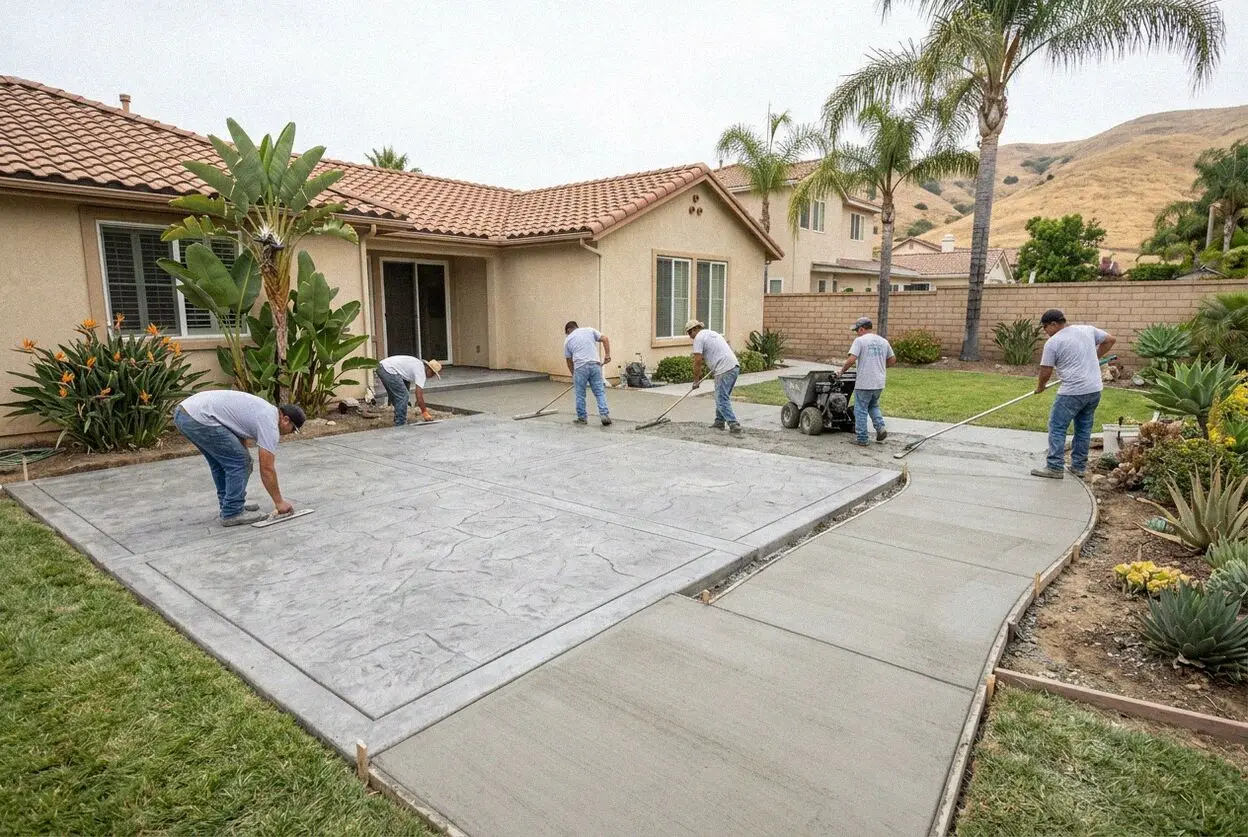
Crew finishing a concrete patio behind a Costa Mesa ranch house
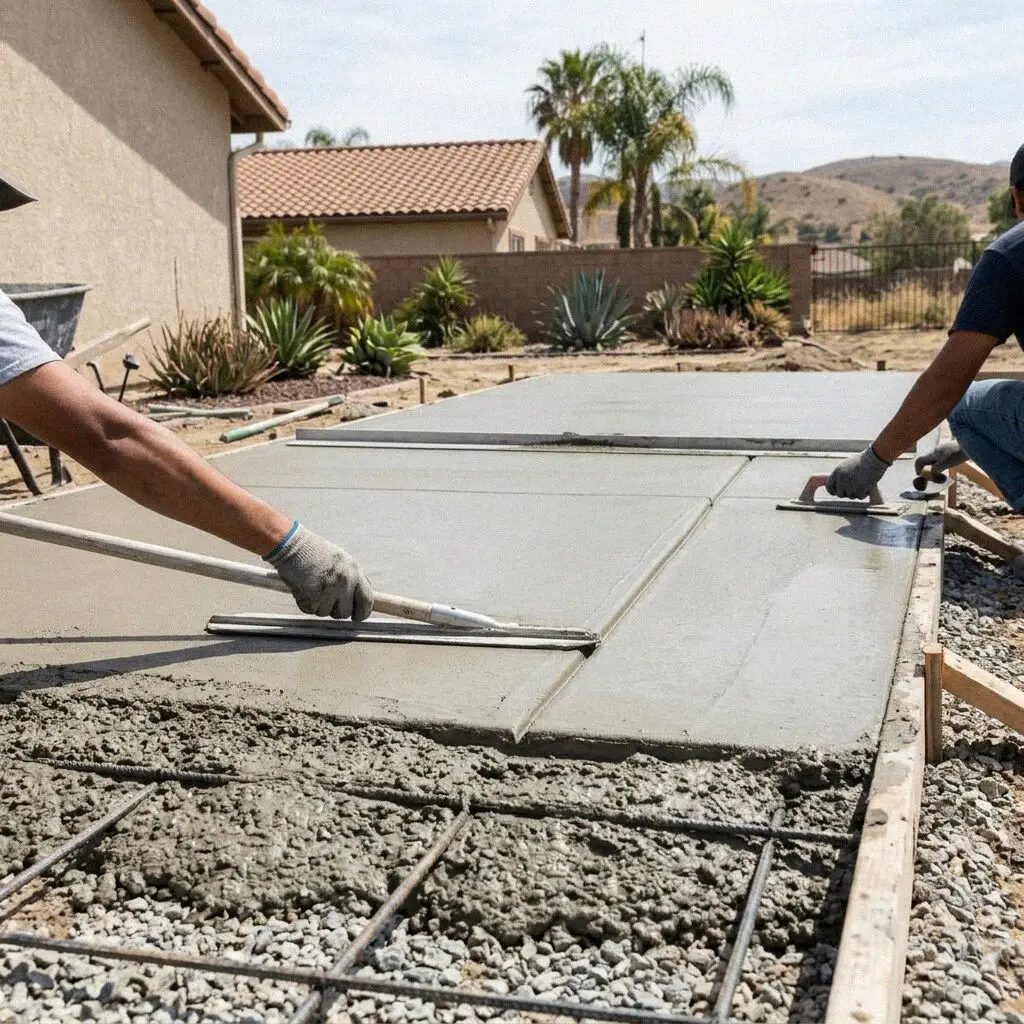
Hands floating a fresh patio slab up to a door threshold in Costa Mesa

The job, in this city

Pouring a Patio Behind a Costa Mesa Ranch House

A patio fails the house before it fails itself. The postwar ranch houses across Costa Mesa mostly stand on slab floors set a few inches above the yard, with a sliding door opening straight onto the grass, and a patio poured level with that sill, or tipped toward it, sends every storm across the threshold and into the carpet. The slab can be perfect and the job still wrong, so the patio is set by the door first and everything else is measured from that line.

Harbor Costa Mesa Concrete pours the patio a step below the sill, falls it 2 percent from the house, and carries the water to the side yard swale that a Costa Mesa lot drains through to the street. Julian Mercado, who founded the company in 2019 after 15 years on crews across coastal Orange County, shoots the sill, the swale and the fence line with a level before a figure is written, because a patio that traps water between house and fence is a pond with a house for a bank.

The work is done under a CSLB C-8 license with liability insurance on every job. A cover over the patio needs a building permit that the slab beneath it does not, so where a cover is planned its post footings are dug and poured with the slab and inspected by the City of Costa Mesa before the pour, and the cover goes up later without cutting the new patio open. Every patio carries a written workmanship guarantee against defects in how it was built.


What to look for

When does a Costa Mesa back yard need a new patio?

Silt on the door track

A brown line of silt along the bottom track of the sliding door is where the last storm stood. It means the slab outside is level with the sill or tipped toward it, and every winter rain has been pooling against the house. Wiping it away each spring does nothing about the next one.

Moss on the shaded half

A patio on the north side of the house, or under an eave, stays damp under the marine layer for weeks in spring, and green moss on that half means water is sitting rather than leaving. A slab with a fall on it dries by lunchtime; one without holds the damp and gets slick.

The swale filled by the slab

Look down the side yard for the shallow ditch the builder graded to carry the back yard's water to the street. A patio or a shed base poured across it, or a lawn built up over it, dams the whole yard. After that a storm has nowhere to go but the lowest point, usually the door.

A crack tracing the foundation

A crack running parallel to the house, a foot or two out from the wall, is the patio breaking over the edge of the foundation footing. The slab was poured across the footing's shoulder with no joint, so the house holds one side still while the yard side settles. That slab comes out.

In every patio

What Goes Into Every Costa Mesa Patio We Pour

Eight things are in every patio at no separate line, and each one exists because of where a Costa Mesa patio sits: a few inches under a door sill, against a slab foundation, and upstream of the swale that drains the yard to the street.

The old slab comes out

Whatever was there, a cracked patio, pavers on sand or a lawn, is lifted and hauled the same day, down to soil the level can be shot from.

Sill and swale shot in

The door sill, the foundation edge and the side yard swale are shot with a level, and the patio's top and its fall are fixed from them.

Base compacted to the fall

Crushed base goes in and is plate-compacted to the same 2 percent fall the slab will take, so the water leaves the base as well as the top.

A step below the sill

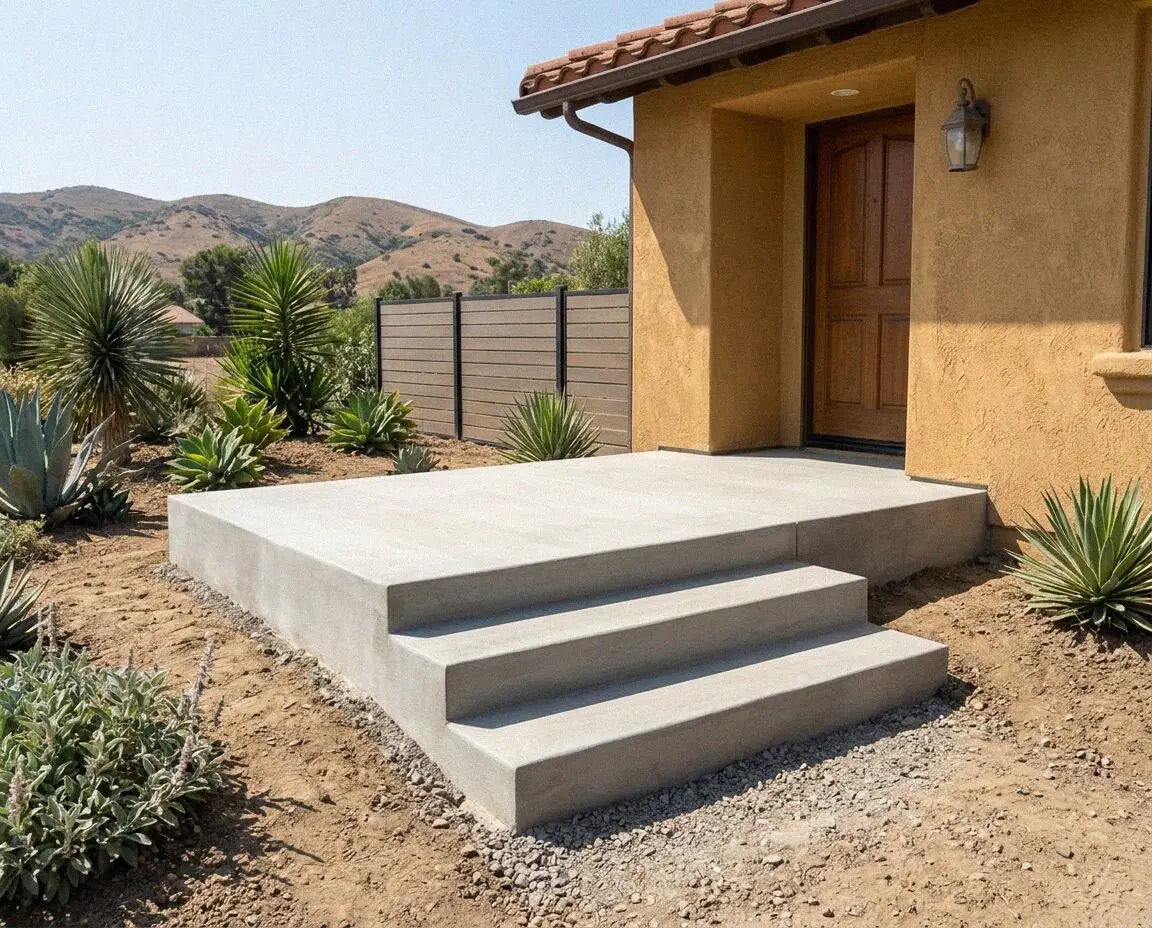
The finish sits a full step below the door's sill, so a storm cannot stand at the track and the door can open with a hose running on the slab.

A joint along the house

Expansion felt runs the length of the foundation, so the patio moves with the yard and never breaks over the footing's shoulder.

Footings for a cover

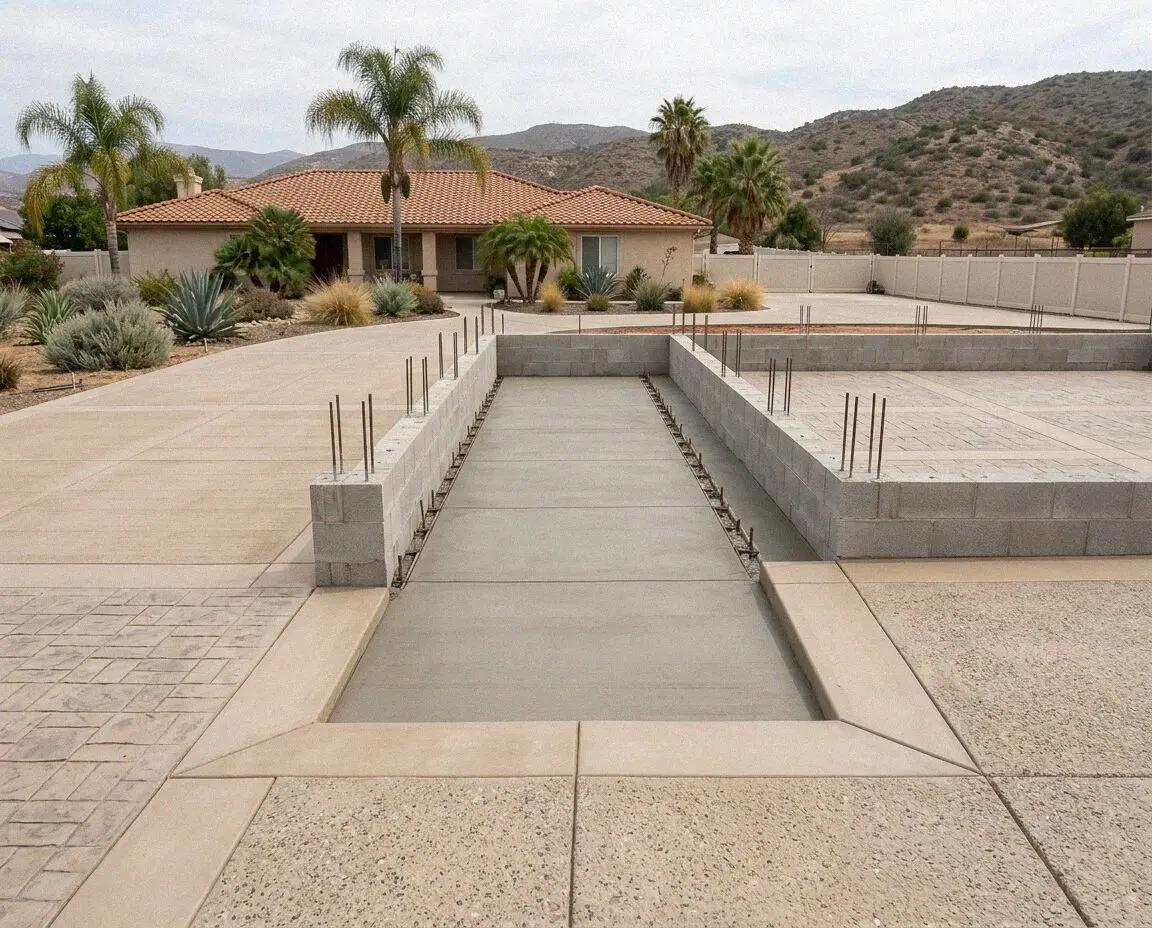
Where a cover is planned, its post footings are dug and poured with the slab and inspected first, so the cover never cuts the patio open.

Swale cleared to the front

The side yard is raked back to its grade and the swale cleared to the front, so the water the patio sheds has its way out on the day we leave.

Walk-through and guarantee

We run a hose on the slab with you and watch where the water goes, check it against the estimate, and hand over the written guarantee.

Four finishes

Costa Mesa Patio Finishes, Side by Side

Four finishes for a patio here, judged against what a Costa Mesa slab lives with: a marine layer that keeps it damp half the mornings of the year, and winters mild enough to sit out through. The base, the fall and the joint at the house are the same in each.

OptionGrip when dampSealingMoss and stainsA patch shows
Broom finishFull grip, the broom lines hold a shoeNone, the surface is left bareWashes off with a hoseBarely, broomed to match
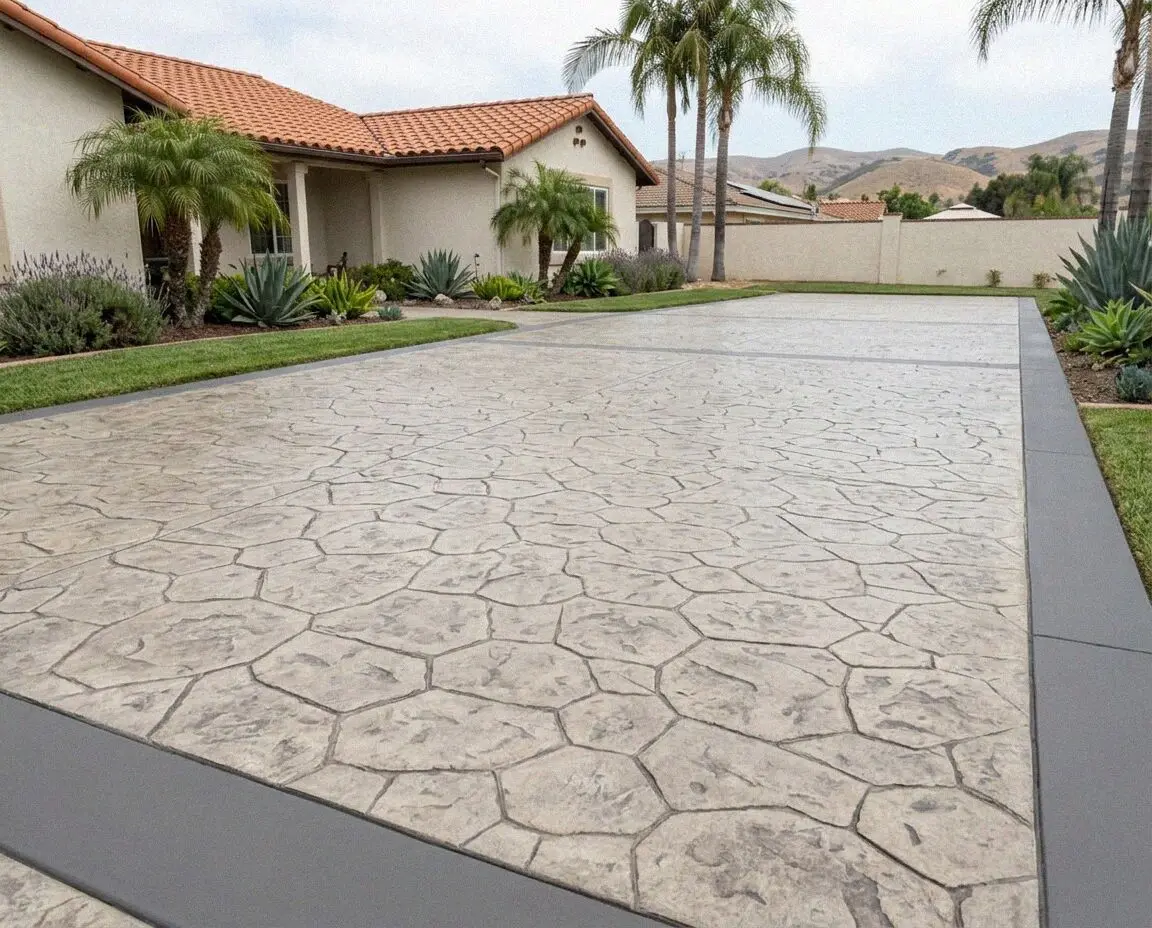
Colored and stampedGood on a deep stamp, fair on a smooth oneA penetrating sealer, on a scheduleColor fades under sun without itPlainly, color never matches twice
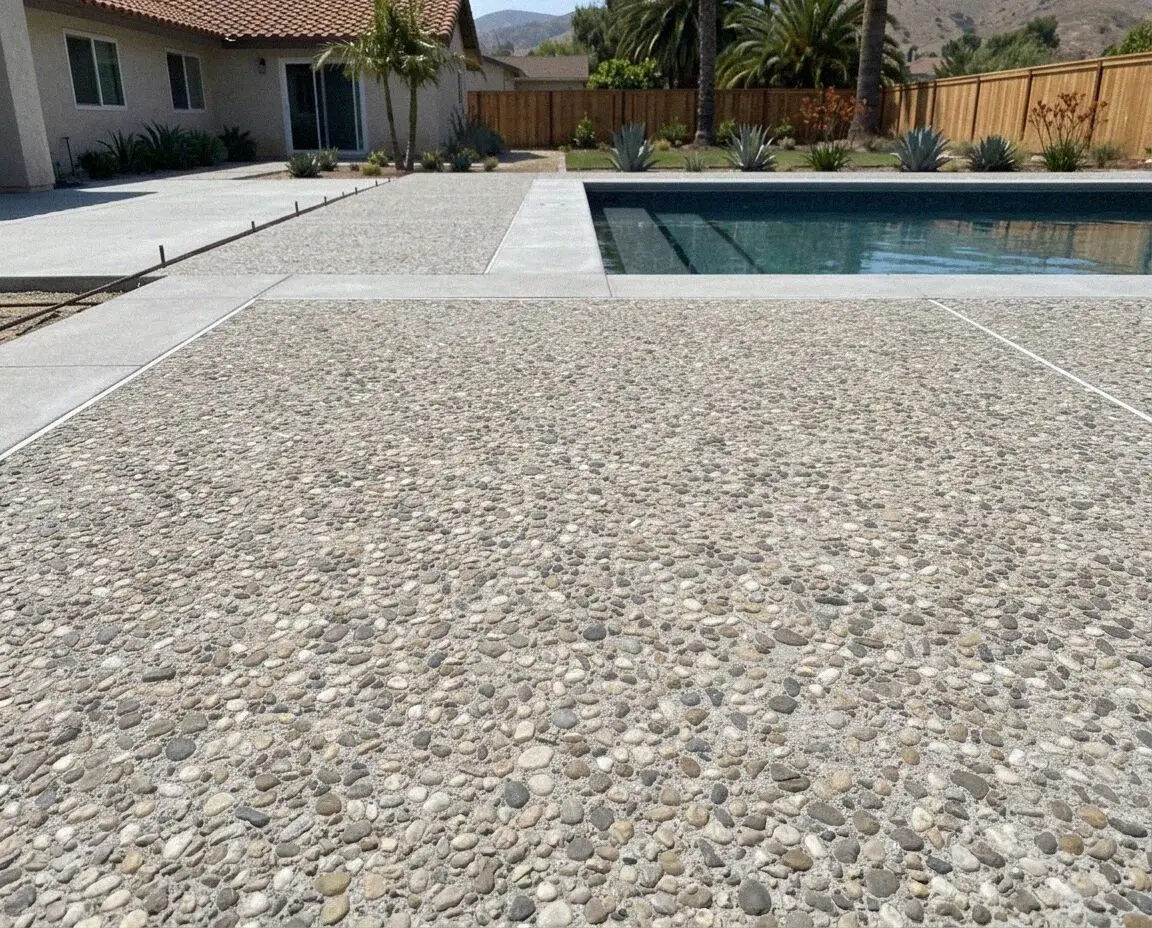
Exposed aggregateMost of the four, the stones biteA sealer to hold the stones inMoss takes the low spots in shadePlainly, the stone mix is hard to repeat
Smooth trowel with a bandSlick when wet, kept for a covered patioA sealer against stains, or noneShows every leaf and every pot ringBarely, under a cover

Broom is the least work and exposed aggregate the most; a stamped or colored slab costs more in the sealing that keeps it than in the pour, and the estimate says so.

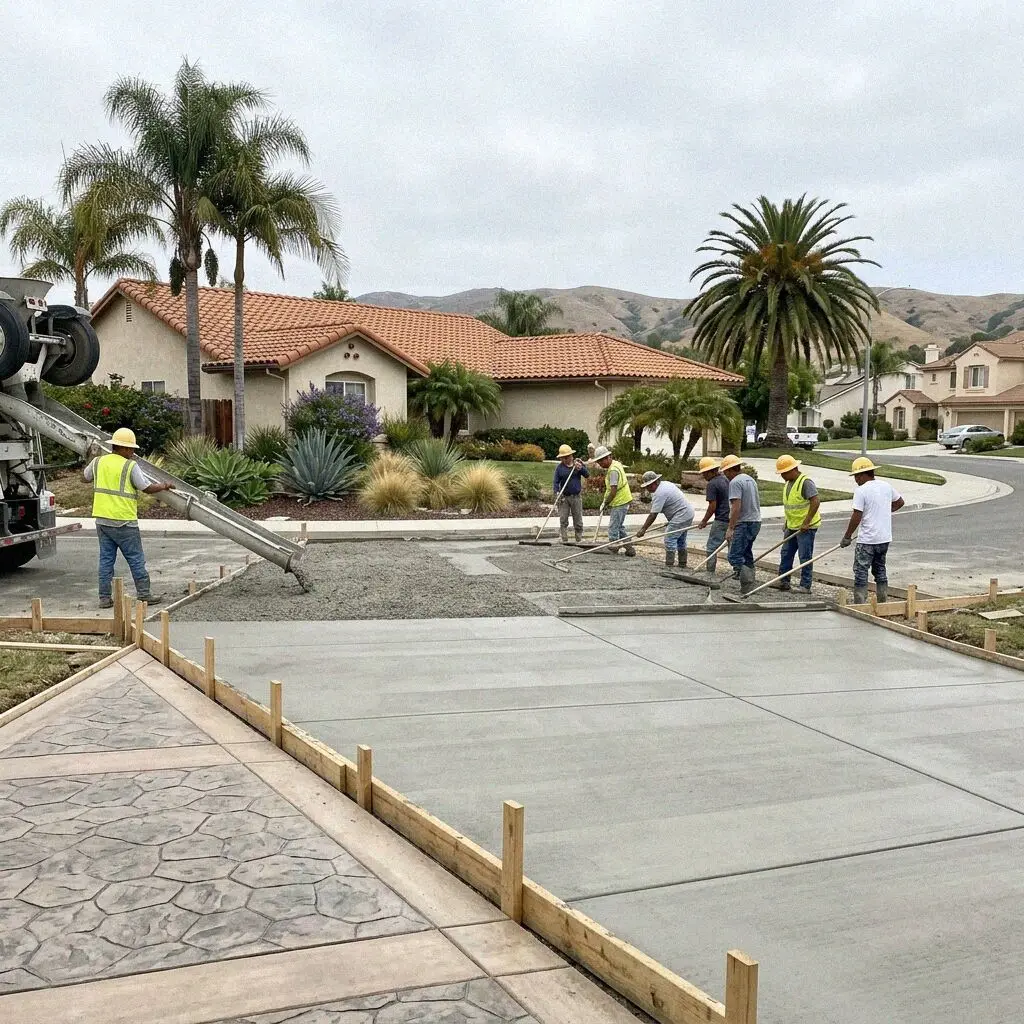
Crew screeding a concrete patio behind a Costa Mesa ranch house

Why the door sets the slab

Why a Costa Mesa Patio Is Set by the Door

The sill of the sliding door fixes how high a patio can sit, and the side yard fixes which way it falls, so both are shot with a level before the slab is drawn.

The tracts of the 1950s and 1960s, Mesa del Mar, College Park, the State Streets and Mesa Verde, were built mostly on slab floors with the back door's sill a hand's height above the grass, and their yards were graded to shed water around the house through one side yard. Sixty years of lawns, planters and paving have raised those yards and buried the swales, so on many lots the back of the house now sits at the lowest point, and a patio poured to that ground is poured into a pond.

The marine layer is the other half. From May into August the mornings here are gray and damp until late morning, and a patio that holds water on its surface never fully dries between one morning and the next, so its shaded half goes green by spring and slick by summer. A slab with a true fall on it is dry by noon. Where the yard also holds a unit, the patio is the path between two doors, poured to the unit's slab with felt between.

The five stages

How We Build a Patio in Costa Mesa

Five stages from the first call to the hose test at the end, with Julian Mercado at the property for the first and the last. Where a cover is going up, its permit is filed before the footings are dug, so the inspection lands first.

1

Shoot the sill, find the swale

Julian Mercado measures the yard, shoots the sill, the footing and the swale with a level, and writes the figure at your kitchen table.

2

Pick the finish and the date

You choose the finish and the size, decide whether a cover is coming, and take a date; the cover's permit is filed the same week.

3

Lift the old slab, cut the grade

The old patio or the turf comes out, the yard is cut to the fall the door needs, and the swale is dug back to its original line.

4

Base, felt, footings, the pour

Base compacted, felt set along the house, any post footings poured and inspected, then the slab placed and finished in one morning.

5

Cut, cured and hosed with you

Joints cut that afternoon, the slab cured damp for 7 days, then we run a hose across it with you and watch the water reach the swale.

What moves the estimate

What Sets the Estimate on a Costa Mesa Patio

How much yard has to be cut moves the figure more than the slab's size. A patio on a yard that still falls to its swale is a base and a pour; one on a yard built up against the house is a regrade first. Every estimate is measured and written on site.

A single-family ranch house

How far the yard has risen against the sill since it was built, and whether the swale still runs, set the digging before the slab is priced.

A rental with a unit behind

A patio that is the path between two doors is poured to both sills and both slabs, and the landlord gets slab, footings and path itemized.

A yard with no way out

Where the swale has been built over, a drain is laid under the patio to the street, and its trench and outlet are their own lines on the estimate.

Stamped, colored or exposed

A stamped pattern or exposed stone is a second pass by the crew on the day, and the sealer that keeps it is on the estimate with how often.

The visit is free and the figure is written before we leave, with regrade, slab, finish and cover footings as separate lines. We call within 1 business day. (949) 541-4812 or send us a message.

Ready to have your Costa Mesa patio measured?

Send the form or call, and you hear back within 1 business day with a time. Julian Mercado shoots the door sill and the swale with a level, measures the slab you want, and writes the figure at the house with the regrade on its own line.

Request a Free Estimate

Written on site · No obligation

By submitting, you agree to our disclosure and consent terms, including being contacted by Harbor Costa Mesa Concrete.

Patios poured

Three Costa Mesa Patios, in Their Owners' Words

Three reviews left on Google, Facebook and the BBB, each about a patio rather than a driveway or a slab, and each saying where the water went in the first winter after the pour.

Google review

“Our Eastside house had water at the slider every January and a patio that sloped the wrong way. They took it out, cut the yard down, and poured the new one a step below the door pitched toward the side gate. First storm after, I stood at the slider and watched it all go out to the street.”

Renee L. of the EastsidePatio regraded and repoured · Google · 2022
BBB review

“We wanted a cover over the patio in Mesa del Mar and Julian Mercado told us to get the footings in with the slab. He filed the permit, the inspector came before the pour, and the cover company set their posts straight onto the footings a month later without touching the new concrete.”

Carla V. of Mesa del MarPatio with cover footings · BBB · 2024
Facebook review

“The patio behind our Westside rental was moss from the fence to the door every spring and the tenant slipped on it. New broom slab, a proper fall, and the side yard dug back out to the street. Two springs on and it is dry by mid-morning even under the marine layer.”

Gil P. of the WestsideRental patio replaced · Facebook · 2021

Before you book

Patio Questions We Hear Around Costa Mesa

What moves the figure, how long the yard is out of use, which part of a covered patio the City permits, what is guaranteed and how the water is checked, answered for a tract back yard here.

(949) 541-4812
  • What makes one patio estimate bigger than another here?

    The regrade, before the size of the slab. A yard that still falls to its swale needs the old surface out and a base in; a yard that has built up against the house over sixty years has to be cut down to put the patio a step below the sill and the spoil hauled, and that digging is most of the difference between two patios of one size. Cover footings and a drain to the street are lines of their own.

  • How long is the back yard out of use for a new patio?

    About ten days. Two to three working days for the crew, the first to lift the old slab and cut the grade, the second for base, felt and forms, the third the pour and the joints; then the slab is cured damp for 7 days. Walk on it after 24 to 48 hours and put the table back on it after the seventh day. A cover's footings add the inspection before the pour, which is why the permit goes in the week the date is set.

  • Does the estimate include regrading the yard?

    Yes. Cutting the yard down to the level the door needs, hauling the spoil and the old slab, clearing the swale back to the street and raking the side yard level are all written into the figure, because a patio poured without them is poured wrong. What sits outside it is named at the visit: a sprinkler line that has to move, a drain under the slab where the swale is gone, or the cover itself, another trade's.

  • Does a patio cover need a permit in Costa Mesa?

    Yes, a building permit from the City of Costa Mesa, though the slab under it does not. The cover's footings are part of what the City inspects, so they go in with the patio and the inspector sees the holes and the steel before the pour. We file the permit with the cover's drawing, dig the footings to it and stand the inspection, and the cover company then sets its posts on footings already passed.

  • Will insurance pay for water that came in under the door?

    For the floor, sometimes; for the patio, no. Water that entered during one named storm can be a covered loss for the flooring it ruined, and a claim is worth asking about with photographs and a date. The patio that sent it there is graded wrong, which every policy treats as maintenance, so the slab is the owner's to replace. Fix the patio before the claim is settled, so the adjuster sees the cause is gone.

  • What is guaranteed on a Costa Mesa patio?

    How it was built and where the water goes. The step below the sill, the 2 percent fall, the base, the felt along the house, the joints and the finish are on the estimate and carry a written workmanship guarantee against defects in how it was built, and if a hose run on the slab pools anywhere, that is ours to correct. Moss in shade, leaf stains, a color fading in sun and a tree root lifting a corner sit outside.

  • What goes into the slab, and how thick is a patio?

    4 inches of 3,500 psi ready-mix over compacted crushed base, with welded mesh at mid-depth and half-inch expansion felt along the foundation. A patio carries no wheel, so 4 inches is the depth, and it goes to 5 only where a spa or a masonry barbecue will stand. Cover footings take number 3 rebar and the post base the cover's drawing calls for. The mix, the steel and the depth are named on the estimate you sign.

  • Do I need to be home while the patio is poured?

    For the measure and the hose test, and not between. The crew needs the side gate unlocked, a hose bib, the dog inside and the sprinklers off for the week, and on a rental we set the days with the tenant so the yard is clear. If the patio is the only way to a unit at the back, say so at the visit and the pour is planned so a path stays open. The hose test at the end is the part worth being there for.

Nearby towns

Concrete Patios Poured Around Costa Mesa

The eight nearest towns on the coverage list, with the straight-line distance from the office on Newport Boulevard beside each. Every patio is shot with a level at the house before a figure is written.

Show All Areas We Serve

Book a free measure of your Costa Mesa patio

Call or send the form and you hear back within 1 business day. Say whether water has ever reached the door and whether a cover is planned, and the visit is booked around your week, with the tenant's if the house is rented.