Serving Costa Mesa, CA and surrounding areas.(949) 541-4812
Harbor Costa Mesa Concrete

Foundation Raising in Costa Mesa, CA, Where the Posts Give Before the Footing Does

Harbor Costa Mesa Concrete lifts sagging postwar floors from the crawl space, on new footings and posts, and piers a perimeter only where ground moved. Every estimate is measured and written on site.

Google reviewsFacebook reviewsBetter Business Bureau reviews5.0 Stars Rated by our customers · Google, Facebook and the BBB
Crew setting a jack under a girder in the crawl space of a Costa Mesa house
Hands bolting a new treated post to a girder under a Costa Mesa house

How a house is lifted here

Raising a Sagging Floor in a Costa Mesa Ranch House

A raised floor in this city sags because the wood under it gave, not because the ground did. The Eastside houses from the years around incorporation stand on a perimeter footing with the middle of the floor carried on girders, posts and pier blocks, and under the marine layer that crawl space is damp from May into August. Posts wick water up from the pier, girders soften where the post meets them, and the floor bows toward the center of the room while the walls have not moved.

Harbor Costa Mesa Concrete was founded in 2019 by Julian Mercado, after 15 years on crews across coastal Orange County, and he is the one under the house with the flashlight before anything is written. Most of what he finds is rot and a pier block on bare sand, fixed from inside with a footing poured under each new pier, a treated post cut to the level line and the girder jacked up to it. A perimeter that has itself dropped, on the Westside flats or on fill, is piered.

A lift is a building permit from the City of Costa Mesa, and a pier job carries an engineer's drawing with it, both handled by us and inspected before the crawl space is closed. The work is done under a CSLB C-8 license with liability insurance on every job, and the tenant stays in the house, since a floor comes up a fraction of an inch at a time through the hatch. Footings, posts and piers carry a written workmanship guarantee against defects in how it was built.


Sag or settlement

When does a Costa Mesa floor need its foundation raised?

A floor that dips mid-room

Set a ball down in the hall of an Eastside ranch house and it rolls to the middle of the floor, not to a wall. That is a girder that has come down off a post, and it is the commonest fault under a house here because the posts stand in a crawl space that is damp four months a year.

Doors that bind in the wet months

Interior doors that swing clear in October and stick by June are a floor moving with the moisture in the crawl space, not with the seasons in the ground. Sand here does not swell, so the movement is softened wood taking up water and letting the floor down a little more each spring.

A soft spot or a musty smell

A floorboard that gives underfoot near a bathroom, or a crawl space that smells of damp when the hatch is lifted, is the girder or the sill going the way the post went. Rot climbs. A post on a wet pier block takes the water up into the beam it holds, and the floor above is next.

A perimeter crack on the flats

A stair-step crack in the stucco at a corner, or a stem wall parted from the porch slab, is the one sign that means the ground and not the wood. It shows on the flats below the Westside bluff and on lots that were filled, and it needs piers under the footing, not posts.

In every lift

What Goes Into Raising a Costa Mesa Foundation

Eight things are in every lift at no separate line, and each answers what a damp crawl space on sand does to a postwar house: posts rotted from the bottom up, pier blocks set on nothing, and the odd perimeter dropped into fill on the flats.

Crawl space surveyed

Every post, pier and girder is probed and the floor above is leveled on a laser, so the lift is drawn before a jack goes under anything.

Water traced to its source

The downspout, the sprinkler or the leaking trap that keeps the crawl space wet is found first, because a new post on wet sand rots like the old.

Footings under new piers

Each new pier stands on a concrete footing dug into compacted sand and poured square, not on a block set on the dirt as the originals were.

Posts in treated lumber

New posts are pressure-treated, cut to the level line and stood off the pier on a metal base, so the end grain never sits in the damp again.

Girders jacked in stages

The beam comes up an eighth of an inch at a time across every jack, over days where it needs it, so plaster and tile above are not cracked.

Piers where ground moved

A perimeter that dropped on fill is carried on steel piers driven to refusal beside the footing and bracketed to it, one job named on its own line.

Vents and vapor barrier

The crawl space is left drier than we found it, with the vents cleared and a vapor barrier laid on the sand where the damp was coming up.

Walk-through and guarantee

We walk the level with you against the survey, the City's inspection card is signed off, and the written guarantee is handed over before we leave.

How it can be held

Costa Mesa Foundation Lifts, Compared

Four ways to raise a postwar house here, set against what let it down. The survey under the floor is the same in all four, so the table is about what carries the house afterward, how long the crew is there and who has to move out.

OptionFixesBears onDays on siteTenant stays
Posts and footingsA floor sagging mid-room on rotted postsPoured footings in compacted sand2 to 4 days on siteYes, through the hatch only
Sistered girdersBeams softened where the rot climbedNew posts beside the old line3 to 5 days on siteYes, one room's floor at a time
Driven steel piersA perimeter dropped into Westside fillSand the pier refuses in, below the fill4 to 7 days on siteYes, the dig is outside the wall
New perimeter footingA stem wall cracked through, with no steelA rebar footing poured in short bays2 to 3 weeks on siteYes, one wall opened at a time

Posts and footings cost least and answer most houses on the mesa; driven piers cost most and are the only answer on fill, so the survey comes before the choice.

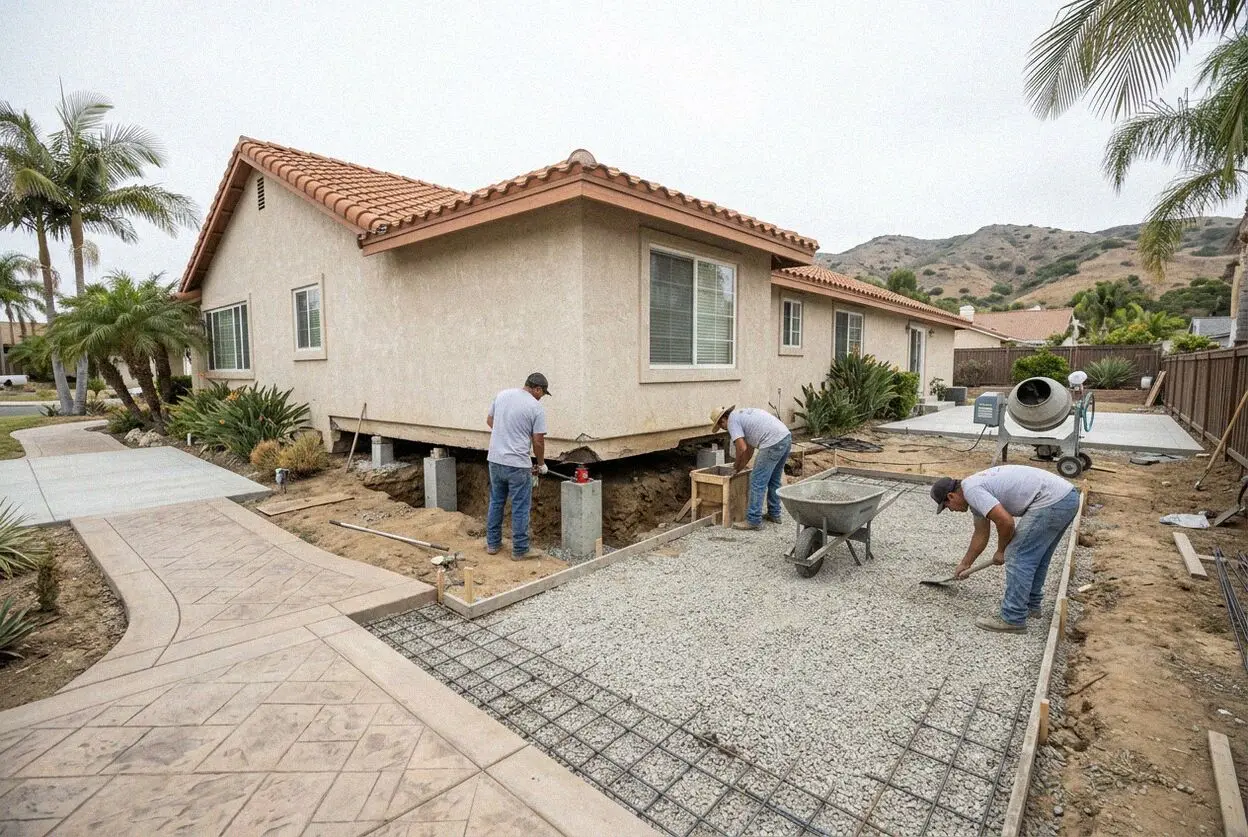
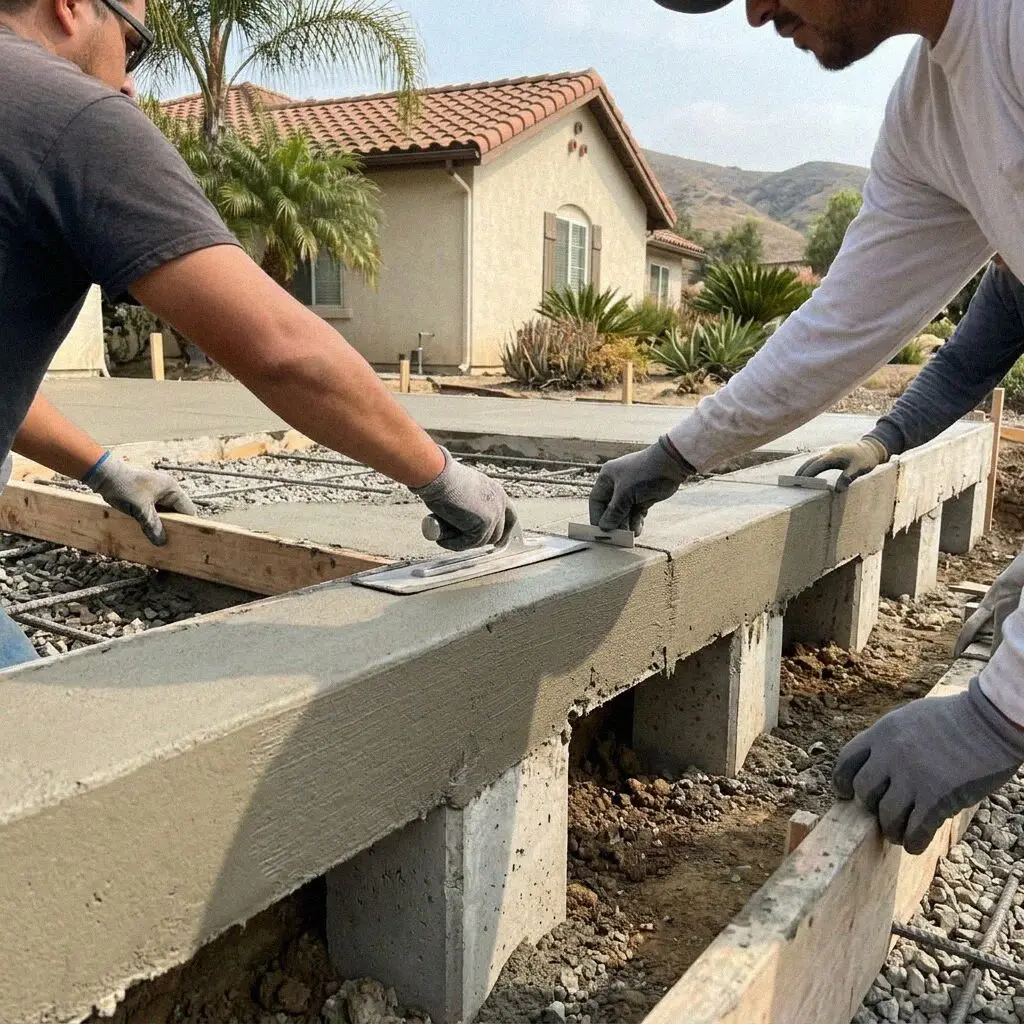
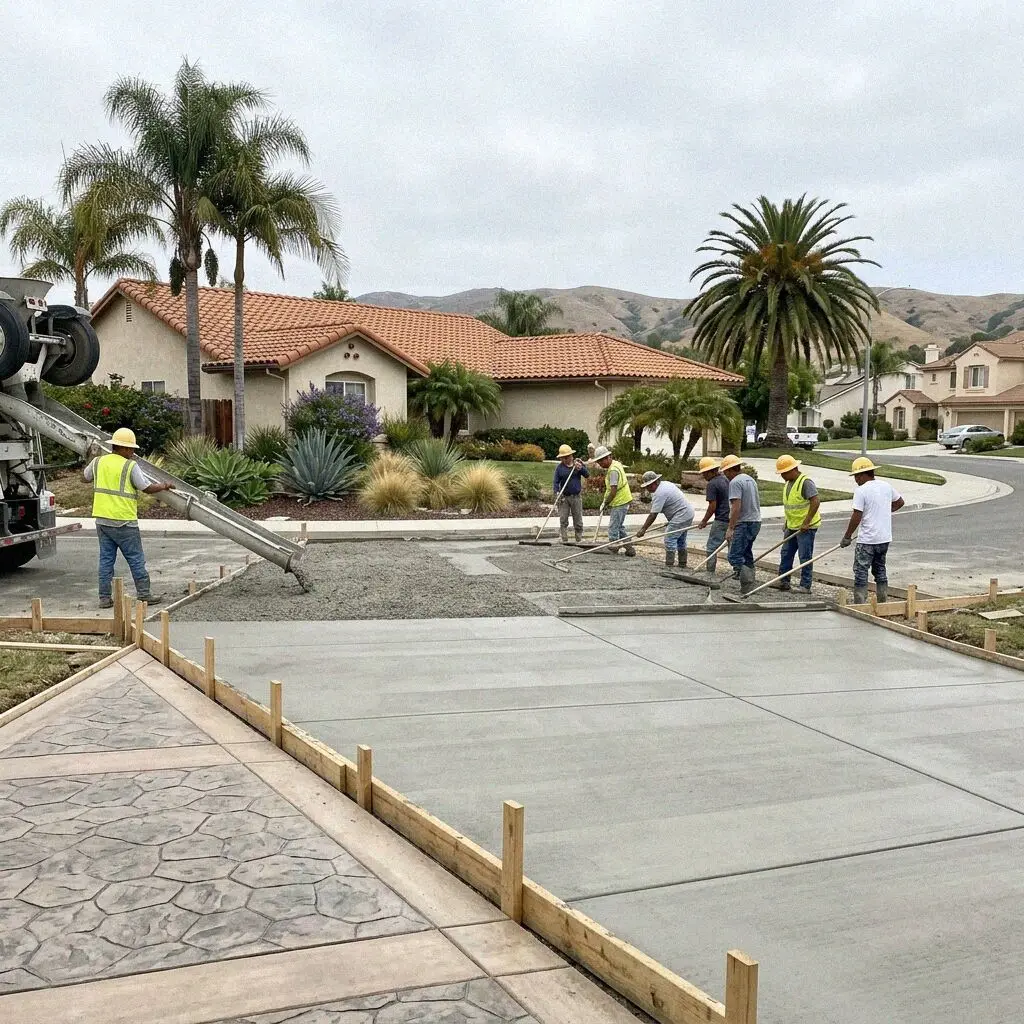
Concrete crew at work under a raised-floor house in Costa Mesa

Damp and sand

Why Floors Sag Before Footings Sink in Costa Mesa

The marine layer is what lifts a house here, and the sand under it is what keeps the job small. The wood is wet four months of the year, and the ground beneath it neither swells nor shrinks.

Costa Mesa stands on a marine terrace of sandy loam, and sand is the kindest ground on this coast to build on, because it drains in hours and holds its volume from a wet January to a dry September. A footing poured on it in 1955 is very often exactly where it was poured. What changed is the air under the floor. From May into August the low cloud sits on the city until noon, the crawl space never dries, and a fir post on a pier block wicks water for seventy summers until it gives.

The exception is ground that was never the mesa. Below the bluff on the Westside, along Placentia Avenue and out toward the river, the flats are silty sand and old fill, and a footing on fill goes down as the fill packs, whatever the wood is doing. There the lift is a pier job under the perimeter rather than a post job under the floor, and the survey tells the two apart before anything is written. That matters to the landlords who own most houses here, since a pier job opens a trench.

From survey to level

How We Raise a Costa Mesa Foundation

Five stages, the same crew at each, and the person who crawled the length of the house with the probe is the person on the jacks. The City's permit is in hand before a footing is dug, and a pier job carries its engineer's drawing.

1

Crawl the house, level the floor

Julian Mercado probes every post and girder, shoots the floor on a laser and traces the water in. The estimate is written before he leaves.

2

Choose the fix and the week

You pick posts, piers or both against what the survey found, and take a date. The building permit is filed with the City first.

3

Dry the crawl space, dig footings

The leak or the downspout is dealt with, the sand under each new pier is dug and compacted, and the footings are poured and left to cure.

4

Jack, post and pier

Jacks take the girders up in eighths of an inch, new treated posts go onto the footings, and a dropped perimeter is bracketed to driven piers.

5

Inspected, dried and handed over

The City inspects, the vents are cleared and a vapor barrier laid, and the level is walked with you against the survey with the paperwork in hand.

Behind the number

What Sets the Estimate on a Costa Mesa Foundation Lift

What let the house down sets the figure, and only the survey finds it. Two floors sagging the same inch can be a post job and a pier job, which is why nothing is quoted from a photograph of a crack. Every estimate is measured and written on site.

The single-family ranch house

How many posts have gone, how far the girders came down, and whether the sill has followed them decide the days under the floor.

The duplex or fourplex

A longer building carries more girder on more posts, and a lift is planned room by room so every unit keeps its floor while the crew is under it.

A house on the Westside flats

Piers driven under a perimeter on fill are the biggest item there is, and the engineer's drawing and the City's inspection go with them.

A rebuilt stem wall

Where the old footing is cracked through and has no steel in it, it is replaced in short bays with rebar, a job measured by the foot of wall.

The visit and the written figure cost nothing, and the call that books it comes within 1 business day. A landlord gets one estimate per building. (949) 541-4812 or send us a message.

Ready to have your Costa Mesa floor surveyed?

Send the form or call, and someone rings back within 1 business day to fix a time. Julian Mercado crawls the house, levels the floor and writes the figure at the property, and there is no charge for it and no pressure to sign.

Request a Free Estimate

Written on site · No obligation

By submitting, you agree to our disclosure and consent terms, including being contacted by Harbor Costa Mesa Concrete.

Houses we lifted

Three Costa Mesa Lifts, in Their Owners' Words

Three reviews left on Google, Facebook and the BBB, each about a foundation lift rather than a slab or a driveway, and each naming how far the floor had come down and what holds it up now.

Google review

“Our 1954 house on the Eastside had a hall floor you could feel drop as you walked it. Julian Mercado found nine posts rotted at the bottom and the pier blocks sitting on sand. New footings and posts, four days, and the floor is level on a laser now. Doors close that had not closed in years.”

Marta G. of the EastsidePosts and footings, ranch house · Google · 2024
BBB review

“I own a fourplex off Placentia Avenue and the west wall had dropped an inch and a half into the fill. They drove eight piers along the footing, brought the wall up over two days and closed the stucco crack. All four tenants stayed put and the trench was backfilled the same week.”

Paul R. of the WestsidePiers under a fourplex perimeter · BBB · 2025
Facebook review

“The bathroom floor in our College Park house was soft and the crawl space stank. A leaking tub trap had rotted the girder and two posts. They had the leak fixed first, sistered the beam, set two new posts on footings and put a vapor barrier down. It has been dry under there since.”

Kim H. of College ParkGirder and post replacement · Facebook · 2023

Before you book

Foundation Lift Questions Asked in Costa Mesa

What sets the figure, how long a crew is under the house, which permit the City needs, whether a tenant can stay, and what is guaranteed once the jacks come out, answered for a postwar house here.

(949) 541-4812
  • What makes one foundation lift estimate larger than another?

    What failed under the house, and only the survey says. A floor let down by rotted posts is footings, posts and jacks, a few days through the hatch, and it is the commonest job on the mesa. A perimeter settled into fill on the Westside is driven piers with an engineer's drawing behind them, and a stem wall cracked through is rebuilt by the foot. All of it is probed and leveled at your house and written down first.

  • How long is a crew under the house for a lift?

    Two to four days for a post job, four to seven for piers, and two to three weeks where a stem wall is rebuilt. The lift itself is slow on purpose. A girder comes up an eighth of an inch at a time across every jack, sometimes over several days, so tile and plaster above it are not cracked by being hurried. Footings poured under new piers cure before they take weight, and that wait is inside the days quoted.

  • Does the estimate cover finding and fixing the leak?

    Finding it, yes, and fixing the ones that are ours to fix. A downspout dumping at the stem wall, a hose bib dripping into the crawl space or a sprinkler line against the house is dealt with as part of the job, because a new post on wet sand rots the way the old one did. A leaking drain or supply pipe under the floor is a plumber's work, and we name it at the visit so it is done before the jacks go in.

  • Does raising a foundation need a permit in Costa Mesa?

    Yes. Any work that carries the house, new posts and footings included, is a building permit from the City of Costa Mesa, and piers under a perimeter footing carry an engineer's drawing with the application. We prepare both and meet the inspector, who looks at footings before they are poured and at piers before they are bracketed. The signed-off permit card is what the next buyer's inspector will ask to see.

  • Will homeowners insurance pay to lift a sagging floor?

    Almost never. Rot, settlement and wear are treated as maintenance by the policies written here, so a floor that has come down over sixty damp summers is the owner's to fix. The exception is a sudden covered event, a burst supply line flooding the crawl space in one night, and there the water damage and sometimes the posts under it can be claimed. Photograph the crawl space before anything is touched.

  • What is guaranteed once the house is level?

    How it was built: the footings dug and poured, the posts set on metal bases, the piers driven to refusal and bracketed, and the level recorded on the day. It is a written workmanship guarantee against defects in how it was built. A new leak wetting the crawl space, a pipe under the floor failing, and ground moving under a footing we did not pier sit outside it. Where the fault is ours we come back and fix it.

  • What posts, footings and piers actually go under the house?

    Pressure-treated posts on galvanized post bases, standing on concrete footings poured square in compacted sand with rebar through them, under girders sistered in the same lumber where rot has climbed. A perimeter is carried on galvanized steel push piers driven beside the footing until they refuse and bolted to it with brackets. Every part is named on the estimate, so what goes under the floor can be checked.

  • Do I have to be home, or can the tenant stay?

    The tenant stays. The crew goes in and out through the crawl space hatch, the jacks work in fractions of an inch, and the floor above is walked on all day, with a creak as it comes up the only warning. You need to be there for the survey at the start and the walk-through at the end, and a landlord can send a key for the days between. A pier job opens a trench along one outside wall while it lasts.

Towns we lift in

Foundation Raising Around Costa Mesa

The eight nearest towns on the list, with the straight-line distance from the office on Newport Boulevard beside each. Every house is crawled and leveled before a figure is written.

Show All Areas We Serve

Book a free survey of your Costa Mesa foundation

Call or send the form and you hear back within 1 business day. Say which floors dip, whether doors bind in summer, and whether the house is on the mesa or the Westside flats, and the visit can be booked for a day inside the same week.